
Unguided Markets
Kevin Warsh wants to break with forward guidance: fewer rate hints from the Fed, more room for markets to do their own pricing. What happens when the sedative is taken away?

 Contribution by
 Peter
When the Federal Reserve cut the policy rate to zero in December 2008, the central bankers had reached the bottom of their toolbox. Normally, a central bank lowers rates to give a struggling economy some breathing room. But below zero, this interest rate tool becomes less effective. The American economy was in the grip of a financial crisis and needed strong medicine to get back on its feet. One of the remedies? Language.
Not the language of Alan Greenspan, who as Fed chair was famous for sentences that market analysts could chew on for a week. After 2008, the central bank's language became more direct. It no longer just communicated what it was doing today, but also what it would likely do next.
The message was: rates will stay low for the foreseeable future.
 Albert Bozzo
This is forward guidance. A central bank can steer markets not only through its current rate decision, but also through expectations about future ones. The mechanism is simple. If investors believe rates will remain low for a long time, longer-term rates often decline as well. Businesses can borrow more cheaply. Households get better financing terms. Stocks and real estate get a tailwind, because safer alternatives barely yield anything.
For Fed Chair Ben Bernanke, this policy was a bitter necessity after 2008. Rates had hit rock bottom and deflation was lurking. Forward guidance became, alongside the massive buying of bonds (QE), a way to keep stimulating the economy.
Successor Janet Yellen (2014) built on this, but gave the promise a more data-driven character. The Fed increasingly tied its messaging to economic indicators. Rates would stay low, for example, as long as the labor market was weak and inflation remained in check. This gave the central bank more room to change course if reality demanded it. Jerome Powell (2018), the Fed chair who stepped down in 2026, continued along this path.
It should come as no surprise that a central bank wants to calm panic during a crisis. Words naturally become an extension of policy. But the problem with emergency tools is that they tend to stay on the table long after the emergency is over.
Markets grew accustomed to a Fed that both decides and guides. Every rate decision and every press conference was scoured for hints about the next meeting. The dot plot, the chart where Fed officials fill in their rate expectations, achieved an almost religious status. A single dot moving up or down could be enough to move financial markets.
Kevin Warsh wants to break with that habit.
At his first appearance as Powell's successor, he left rates unchanged. But for most listeners, that wasn't the news. The break was in the communication: a shorter statement, the absence of directional language, and a dot plot missing the chair's dot.
Kevin Warsh refused to give any kind of forward guidance on Wednesday, so - in the absence of any guidance - markets did the predictable thing and priced a much more hawkish Fed (orange). I don't think that's right and this Q&A on Warsh highlights why...https://t.co/XGBfn4sPoe pic.twitter.com/tPYdYWANtE
— Robin Brooks (@robin_j_brooks) June 20, 2026
In several interviews, Warsh explained why he is breaking with his predecessors. Bond yields, inflation expectations, credit spreads, and stock prices all tell you something about growth, inflation, and risk. A central bank wants to pay attention to those signals. But when those prices are primarily reacting to the Fed's own words, the signal gets contaminated. The Fed says something, the market prices it in, and then the Fed looks at the market—only to see its own language reflected back.
Warsh wants markets to start doing their own math again. What do the inflation figures say? What's happening with wages? How strong is credit demand? Is the economy cooling down, or is it still running too hot? Less Fed-speak should make market prices less dependent on the central bank—and therefore more useful to the Fed.
Jeff Cox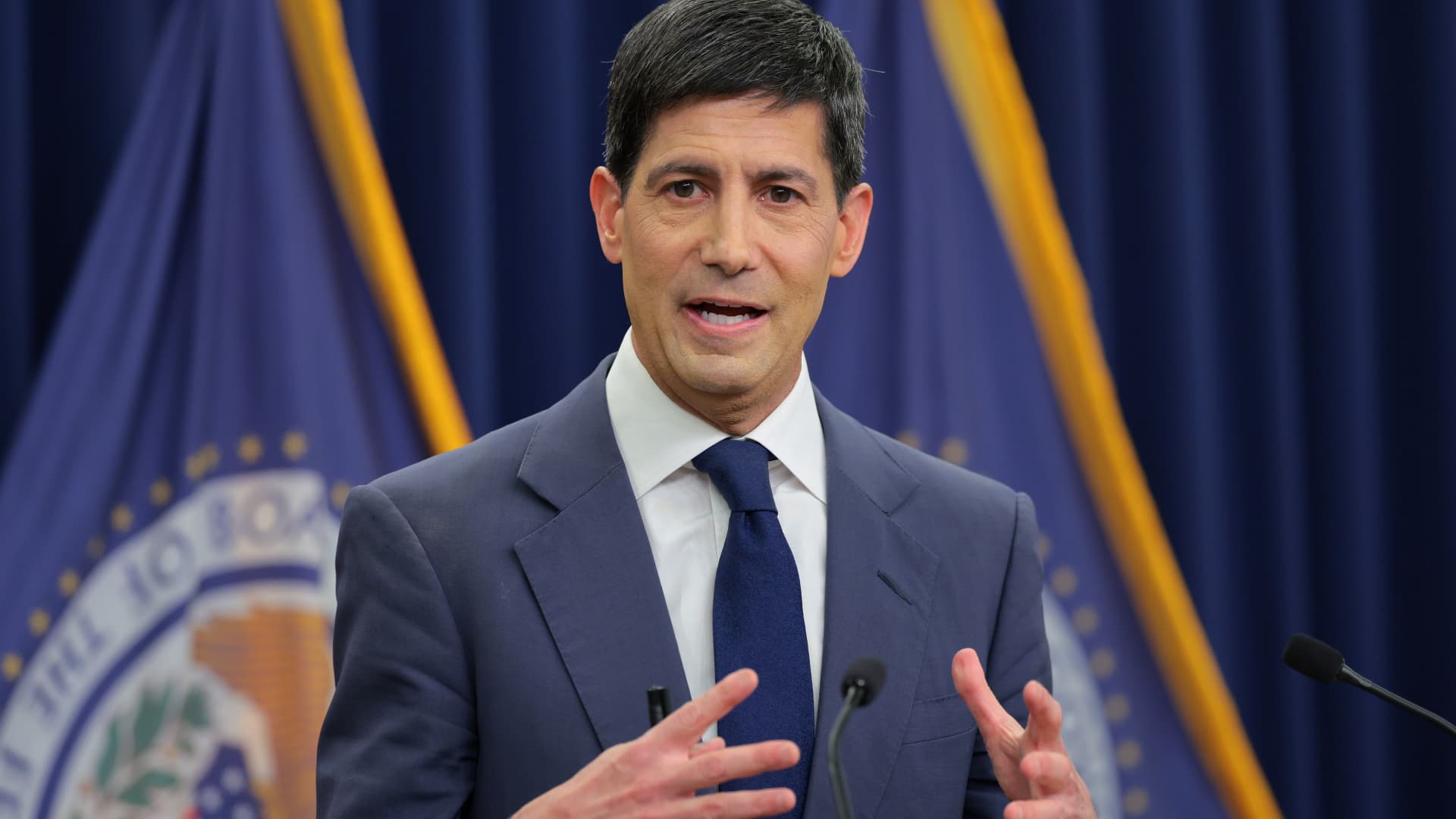
Moreover, we're no longer in 2008. Rates aren't at zero and the economy isn't on the operating table. The problem is stubborn inflation rather than looming deflation. If a central bank hints too clearly at rate cuts, there's a risk that markets start celebrating prematurely. Exactly what you don't want when inflation isn't yet under control.
Warsh isn't alone in this. The European Central Bank had already switched to a different track earlier, where policy decisions are communicated only on a "meeting-by-meeting" basis, without the forward-looking guidance that used to come as a side note. First the data, then the decision.
Lagarde: As inflation is set to stabilise around our 2% target, the Governing Council recently decided to lower key interest rates again by 25 basis points.
— European Central Bank (@ecb) June 23, 2025
Amid exceptional uncertainty, we'll follow a data-dependent and meeting-by-meeting approach to determining monetary policy.
But it's too early to declare the end of forward guidance. The Fed still publishes its rate decision, Warsh still holds press conferences, and Fed governors still give speeches. The dot plot still exists too. And at the first meeting, Warsh was the only one who didn't place a dot—the rest of the committee participated as usual.
We've entered a transition in which the Fed is working toward more unguided markets. This is happening under the spirited leadership of Warsh, who will undoubtedly push hard for this in the coming months. The irony is that investors will listen to Warsh even more intently during this interim period than they already did. Some will complain, or warn about the risks of the new approach. Until the market has kicked the habit, simply because the sedative has been taken away.
More Alpha
Are you a Plus member? Then we continue with the following topics:
- Sam Bankman-Fried's appeal rejected
- Glamsterdam draws closer: Ethereum tackles MEV centralization
- Is Binance being pushed out of the EU?
Below that, you'll find the news snacks—a handy overview of the news that truly mattered this past week.
1️⃣ Sam Bankman-Fried's appeal rejected
 Contribution by
 Erik
A federal appeals court in New York has rejected Sam Bankman-Fried's (SBF) appeal. The court upheld both the conviction and the 25-year prison sentence. According to the ruling, the founder of FTX—the crypto exchange that collapsed in 2022—was the "driving force behind one of the largest fraud cases ever." His lawyers argued that evidence had been unfairly restricted, but the three judges swept that objection aside. The evidence against Bankman-Fried was, in their words, "conservatively presented and solid."
SBF's only realistic way out is now a presidential pardon. Last year, Silk Road founder Ross Ulbricht managed to secure one, as did Binance's Changpeng Zhao (CZ). SBF filed a clemency request in early June, but Trump told a reporter that he doesn't know SBF and has no plans to act. On Polymarket, the odds of a pardon in 2026 are around 5%.
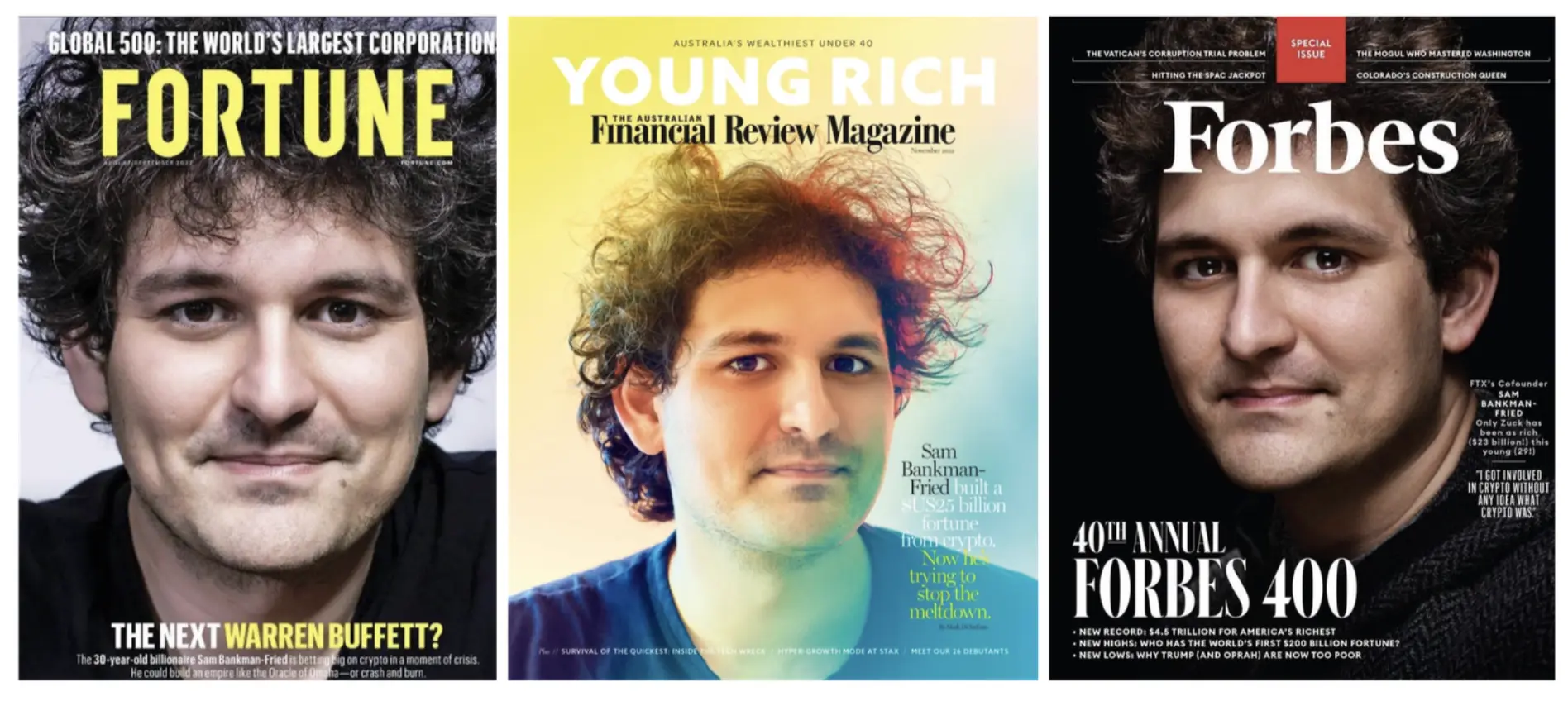
SBF's problem? He's crypto's fallen wunderkind—the guy who graced the cover of Forbes in October 2021 (top signal!) and now has very few friends left.
Ross Ulbricht succeeded in part thanks to a large base of supporters in the bitcoin community who kept lobbying on his behalf. He also came across as humble and mature in prison. CZ remained the majority shareholder of Binance even after his conviction, and Binance supported the USD1 stablecoin from the Trump family's World Liberty Finance. Compared to those two, SBF's aura has faded considerably.
What doesn't help is that despite the dramatic turn his life has taken, he hasn't changed one bit: he's still the same somewhat scatterbrained oddball who keeps undermining his own case. That's evident once again from an extensive profile that NYMag wrote about him, based on phone calls and emails from prison, along with excerpts from his unpublished novel, named after his stuffed animal: Manfred.
The vegan SBF philosophizes from his cell about Oreo cookies—vegan food that's available in prison. He's annoyed at his own happiness about it, because he doesn't want to waste "important neurons" on what he calls his "find-the-Oreo neurons." SBF is also intent on not emerging from prison as a changed man in 25 years. Also unhelpful, to put it mildly: he let himself be interviewed by Tucker Carlson at the first prison where he was held. That violated the rules and earned him a stint in solitary confinement.
The 'greatest investor ever'
It's extra bitter that the rejected appeal came in the same week as SpaceX's mega IPO. Alameda—the sister company of SBF's imploded FTX, which also went bankrupt—was an early investor. SpaceX also confirmed the acquisition of AI company Cursor, a $60 billion stock deal. Alameda was an early investor in that one too.
Alex Finn therefore dubbed Bankman-Fried the greatest investor of all time. Tongue in cheek, of course, but the numbers are impressive. Alameda put $200,000 into Cursor in 2022 for roughly 5 percent of the shares. During the bankruptcy proceedings, that stake was sold in 2023 for the same amount. At SpaceX's valuation, it would now be worth around $3 billion. The stake in Anthropic, purchased in 2021 for $500 million and sold by the estate for $1.3 billion, would be worth tens of billions at recent valuations.
Sam Bankman-Fried is the greatest investor of all time
— Alex Finn (@AlexFinn) June 16, 2026
Cursor just got bought by SpaceX today. SBF invested $200k into Cursor in 2022
He also invested in:
2021- Anthropic: $500M → ~$75B
2022- Robinhood: $648M → ~$5B
2022- Genesis Digital: ~$1.15B → ~$3B
2022- SpaceX… pic.twitter.com/3ygSKruKgZ
SBF undeniably had a nose for great investments. But there was one major problem. You can be the world's best investor—but you'd better not be putting your customers' money into your favorite bets. That's what FTX was convicted for in a case that unraveled in 2022. As the judge put it at sentencing: a thief who turns his loot into a fortune at the casino is still a thief.
We'll keep following the SBF saga. He has limited internet access in prison, can send emails, and has his father post rambling tweets on his behalf.
2️⃣ Glamsterdam draws closer: Ethereum tackles MEV centralization
Contribution by Erik
Ethereum's next major upgrade, Glamsterdam, is drawing closer. The upgrade doesn't have a definitive release date yet, but developers are already testing the planned components on so-called devnets. If all goes well, the mainnet launch will follow in the second half of 2026. It's arguably the most important upgrade since the Merge—the transition to proof of stake in 2022.
While $ETH is near multi-year lows, @ethereum is about to ship its biggest upgrade since the Merge.
— joseph (@FreepanO) June 20, 2026
Glamsterdam just entered its final devnet.
Core devs describes the update as "the largest fork since the Merge."
Here's what's actually coming:
Gas limit: 60M → 200M (3x L1…
One of the most important components of Glamsterdam is Enshrined Proposer-Builder Separation (ePBS). That sounds very technical, but the idea behind it is easy to follow. Ethereum wants to organize the way new blocks are created in a smarter and fairer way.
To understand that, we first need to look at MEV.
On Ethereum, the protocol designates a validator every 12 seconds to propose a new block. That block contains transactions. And the ordering of those transactions can be worth money. In DeFi, for example, it can make a big difference whether a transaction is placed just before or just after another one. A bot can trade around a regular user's transaction. The user gets a worse price, and the bot pockets the profit.
That extra value is called Maximal Extractable Value, or MEV for short. It's been a headache for years. In its harmful forms, MEV feels like a hidden tax that sophisticated bots levy on regular users. But MEV is broader than that. It's not just about annoying tricks—it's about the entire economy surrounding transaction ordering.
And that's exactly where the problem lies. Because of MEV, building blocks has become a specialist's job. In practice, many validators no longer build their own blocks. They use MEV-Boost, a piece of software that lets them have blocks assembled by specialized builders. Those builders do the hard work. They search for the most profitable transaction ordering and then compete to be selected by the validator whose turn it is. They do this by placing a bid: include my block, and you get this fee. The validator usually picks the highest bid.
In principle, anyone can use MEV-Boost—small and large validators alike. But this solution runs through external infrastructure, and that's a vulnerability. If Ethereum depends on a small number of parties outside the protocol for a large share of its block production, a new power center emerges.
That's where ePBS comes in. Proposer-Builder Separation means that the roles of proposer and builder are pulled apart. The proposer is the validator whose turn it is to propose a block. The builder is the specialized party that assembles the block. With ePBS, this separation is no longer handled through standalone software and external relays, but is built into the Ethereum protocol itself.
 Ethereum Improvement Proposals
This makes the network more robust, first and foremost. The builder commits to a block and to a fee for the proposer. The validator doesn't need to see the full contents of the block first—they can choose based on the bid and the protocol rules.
Whether it will also make the MEV economy fairer remains an open question. As long as transactions can be worth money because of their ordering, MEV will persist. Builders will therefore continue searching for profitable blocks. Some parties estimate that the value leaked through MEV could shrink by 70%, provided that lively competition emerges among builders. On the other hand, academic research paints a gloomier picture, describing a builder market with increasingly aggressive strategies to remain profitable.
In short, the last word on this hasn't been spoken—or thought. But if Glamsterdam successfully goes live—August 2026 is being floated as a target date—it will once again prove that Ethereum keeps tinkering with itself. Glamsterdam isn't just about ePBS, by the way. The upgrade also addresses parallel transaction processing and the refinement of gas pricing; fees should better match the actions performed in a transaction, so that costs more accurately reflect the actual load on the network.
Together, these changes should create room for higher capacity on Ethereum itself, although the big numbers about transactions per second and lower fees still need to be proven in practice.
3️⃣ Is Binance being pushed out of the EU?
Contribution by Peter
Starting July 1, crypto companies in the EU must hold a MiCA license to continue offering their services. The transition period that gave existing crypto firms time to obtain the paperwork has then expired in all countries. No license means: no serving European customers.
For Binance, that's a problem. The company found a willing gateway to Europe in Greece. But according to Reuters, that application appears to be falling through. Binance says it hasn't received a formal rejection and that it has spent the past eighteen months working hard to meet the requirements. The company promises to provide more clarity before June 30.
Exclusive: Binance set to lose EU licence bid, permission to offer services in the bloc, sources say https://t.co/TpKppTunrS https://t.co/TpKppTunrS
— Reuters (@Reuters) June 16, 2026
Either way, the clock is ticking mercilessly. Because if Greece falls through, the entire European route essentially collapses. Unless the exchange quickly finds another front door.
France is the most obvious candidate. Binance France has held a registration as a crypto service provider there since 2022. According to The Big Whale, Binance is in talks with the French regulator AMF. France would thus be the last serious lifeline for staying within the EU.
The Big Whale reports that the Greek reversal—the license was reportedly almost in the bag—was primarily political. ECB President Christine Lagarde is said to have pressured the Greek prime minister, because Binance plays a major role in the stablecoin ecosystem. And that's a sensitive topic in Frankfurt, where Lagarde would rather see traditional players like banks in the driver's seat than a crypto exchange with a questionable reputation.
Binance's competitors are already smelling blood. Cinco Días reports that licensed players like Bit2Me, Kraken, and Bitpanda are already fishing in Binance's pond. For Binance, the Spanish newspaper sees three scenarios: obtaining a license after all, even if late; striking a deal with a regulated party to migrate customers; or temporarily operating outside the law, risking sanctions.
🍟 Snacks
To wrap up, some short snacks:
- Toss Bank tests stablecoin use in regular payments. The South Korean internet bank wants to explore whether the Solana network is suitable for international remittances. After that, the collaboration—the Solana Foundation is guiding the experiments—could be expanded to regular payments and tokenized assets. The timing is relevant, as South Korea is working on stablecoin regulations. For Solana, this is an opportunity to position itself as infrastructure for banks.
- Bitcoin funds record outflows for the sixth straight week. In total, investors pulled $227 million out of the ETFs last week. Over the six-week stretch, nearly $6 billion has flowed out in total. Ether funds saw relatively modest outflows of $10 million. Solana, Ripple, and Hyperliquid funds posted positive numbers. Hyperliquid was the favorite with inflows of nearly $30 million. For now, the funds show that the bear market hasn't yet lost its grip.
- Oman centralizes bitcoin mining with a mandatory national mining pool. Licensed miners in the country must join Omanhash, an initiative of the Ministry of Transport, Communications, and Information Technology. In the first phase, roughly 10 EH/s of computing power is expected to come together. That's slightly more than 1 percent of the total hashrate produced by bitcoin miners globally. Oman has been investing in large-scale mining and data centers for some time. With the new structure, the country is placing the sector more firmly under regulatory oversight.
- A Japanese pension fund uses bitcoin as an argument against currency risk. The National Business Corporate Pension Fund from Okayama plans to allocate roughly one percent of its assets to bitcoin starting fiscal year 2026. The move is framed as a hedge against a weakening dollar. The fund manages approximately $136 million for around 1,200 small and medium-sized businesses, and will gain exposure through a passive fund. Direct investments by pension funds remain rare, even in Japan. For them, diversification matters more than short-term speculation.
- Economic conditions for bitcoin miners have deteriorated this year, says JPMorgan. According to the bank's analysts, the bitcoin price has been below estimated production costs for five months, which they peg at roughly $78,000. About a fifth of miners are said to be operating at a loss as a result. Publicly listed miners sold over 32,000 bitcoin in the first quarter, partly to cover operational costs. Some of these companies are pivoting toward AI, where margins are currently higher.
Thank you for reading!
To stay informed about the latest market developments and insights, follow our team members on X:
- Bart Mol (@Bart_Mol)
- Peter Slagter (@pesla)
- Bert Slagter (@bslagter)
- Mike Lelieveld (@mlelieveld)
We appreciate your continued support and look forward to bringing you more comprehensive analysis in our next edition.
Until then!