
The DNB Accidentally Wrote an Advertisement for Bitcoin
The Dutch central bank is moving gold from America to London. What does that operation reveal about geopolitics, crisis preparedness, and the striking advantages of bitcoin?
 Contribution by
 Peter
The Dutch central bank (DNB) wanted to move part of its gold reserves from New York to London. You'd think: grab a truck, a plane, some security guards, and you're done. But... it turned out not to be that simple.
DNB sold almost 59 tonnes of gold in New York and used the proceeds to buy new gold in London. Another 27 tonnes was actually physically transported from the United States and Canada to Zeist. From Zeist, roughly the same quantity of other gold bars was then shipped to London.
Why all the musical chairs? Because the gold bars in North America didn't all meet the international trading standard used in London. Hauling them over and melting them down was more expensive and more complicated than simply selling them on the spot and buying new ones elsewhere.
Welcome to the wonderful world of gold.
The Netherlands owns 612 tonnes of gold. Until recently, about 31 percent of it was held in New York, 31 percent in Zeist, 20 percent in Ottawa, and 18 percent in London. After the operation, London has become our most important foreign storage location at 32 percent. New York and Ottawa have each been reduced to 18.5 percent.
According to the central bank, geopolitical unrest has increased and the Netherlands needs to be better prepared for crises. Storing gold in London is therefore attractive, because that's where the main trading market sits. Gold in New York and Ottawa is, according to DNB, “less readily deployable.”
 De Nederlandsche Bank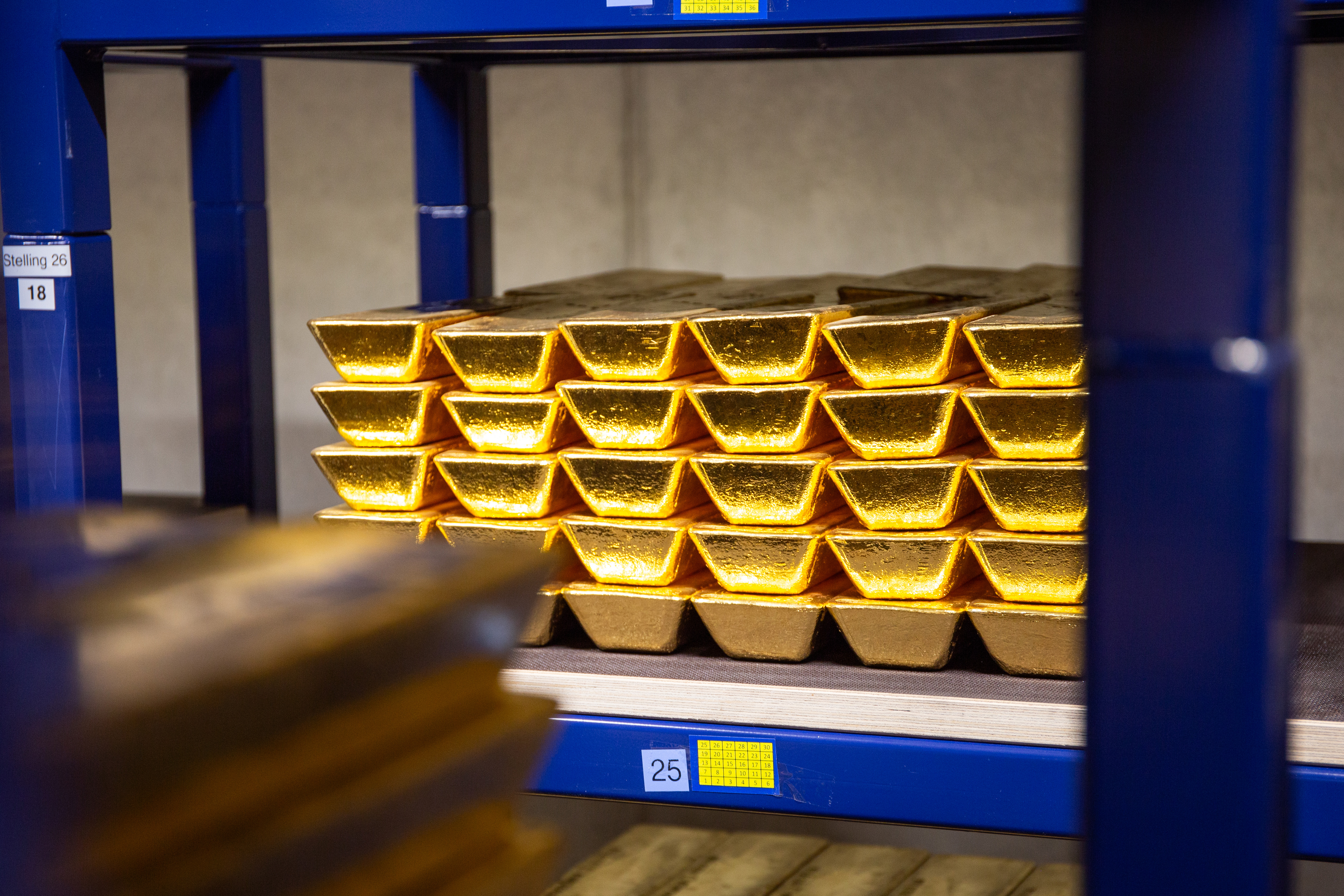
But gold isn't sitting in the vault because DNB is hoping to sell it at a profit next year. The central bank calls it an “anchor of confidence” that's meant to offer protection against extreme systemic risks. If the financial system starts to crack, gold has to remain usable. And apparently it does matter where that gold happens to be.
A bar in New York is not the same as a bar in London. You have to think about jurisdictions, transport, security, and trading standards. If you want to move a few tonnes, you don't just pull a delivery van up to the doors of the Federal Reserve. DNB even deliberately opted for two different methods, so it could gain experience with both physical transport and selling-and-repurchasing elsewhere. Handy, the bank writes, in case one of those two routes isn't available during a future crisis.
It sounds a bit like a prepper packing two go-bags. And the Netherlands isn't the only one thinking about this. Research from the World Gold Council shows that central banks are increasingly spreading out their storage locations. The Bank of England remains the most popular foreign vault.
 World Gold Council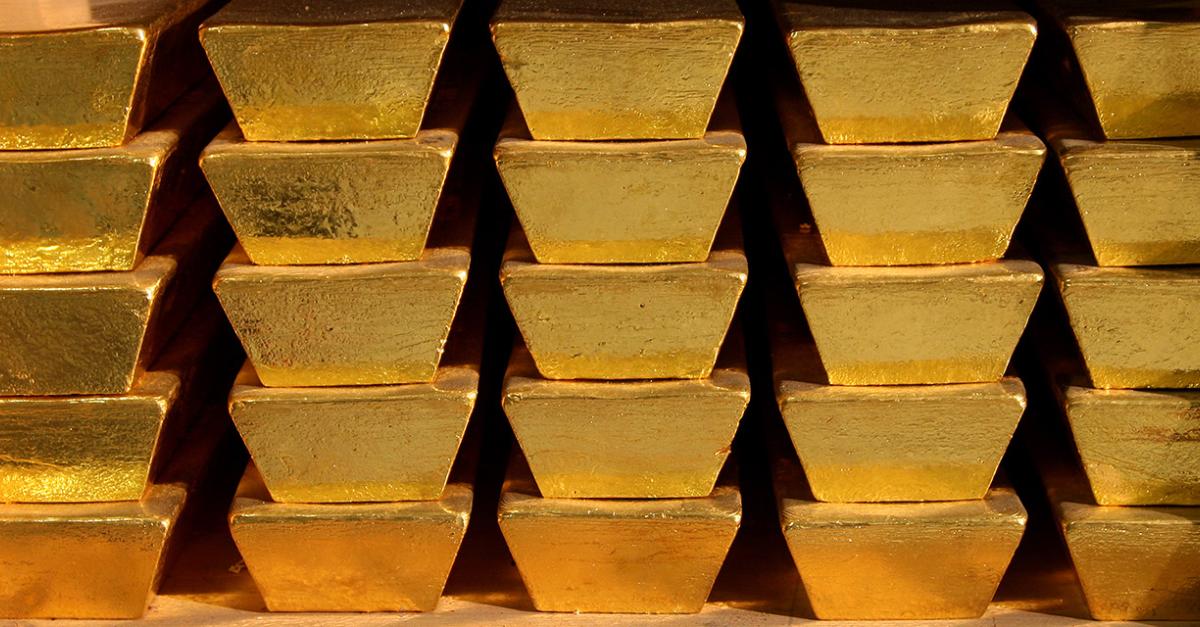
Donald Trump is wisely left unmentioned. But it's hard to view the move entirely in isolation from the deteriorating relationship between Europe and the United States. France has by now likewise sold its remaining gold in New York and replaced it with gold in Europe. In Germany, a debate is raging over the same subject. Everyone wants more autonomy and more alternatives.
Let's line up DNB's requirements for gold. A reserve asset must be independent of the creditworthiness of any company or state. It must be accepted worldwide. It must be liquid. It must remain available during extreme crises. And ideally, you don't want to depend on a single country, a single infrastructure, or a single intermediary.
Bitcoin is more or less designed as an answer to exactly those requirements.
A bitcoin in New York is exactly the same bitcoin as a bitcoin in London. There's no American variant that first has to be melted down before it's readily tradable on a European market. Moving 27 tonnes' worth of value requires no trucks, no planes, and no heavily armed security guards. And on a Saturday night, the market isn't closed.
No, that doesn't automatically make bitcoin superior to gold on every front. Because of its properties, other risks arise in turn. However badly they might want to in Pyongyang, you can't, for instance, hack a gold vault from North Korea.
Still, with its gold operation, DNB has unintentionally given a fine demonstration of the limitations of physical scarcity. Gold has proven over thousands of years that it can function as a monetary asset without an issuing state. It's just that you still need trucks, borders, vaults, and hallmarks.
Bitcoin tries to do the same thing, but without the truck. The more unstable the world becomes, the more seriously central banks have to think about where their reserves are held, who sits in between, and whether they can actually get to them in a crisis. A reserve asset with no geographic home base then starts to sound a lot less exotic.
More Alpha
Are you a Plus member? Then we'll continue with the following topics:
- Asia opts for integration too
- Bitcoin mining in a hashrate bear market
- Dutch cabinet shelves new box 3 tax law
Below that, you'll find the news snacks, a handy overview of the news that really mattered this past week.
1️⃣ Asia opts for integration too
Contribution by Peter
Much of the news that reaches your screen in the Netherlands is Western in origin. That doesn't mean the world stands still in the East. Quite the opposite. That's why, every now and then, we take a lap through Asia in the newsletter.
We start in South Korea. Last week the regulator presented a roadmap to eventually bring not just security tokens, but also ordinary shares, bonds, and other financial products onchain. Starting next year, they're set to experiment with this step by step. In time, the entire transaction, from purchase to settlement, could move onto blockchain networks. Stablecoins would play a leading role in that.
First Japan & now South Korea.
— Ursulaok (@Ursulaok) September 6, 2026
Korea is moving toward tokenised stocks, bonds and funds from 2027, just days after Japan’s push into blockchain settlement.
Less crypto noise. More blockchain becoming actual financial market infrastructure.https://t.co/uYVt9FLuZg
A few thousand kilometres away, Singapore is choosing a similar direction. The city-state is working on legislation that gives stablecoins an official place in the financial system. With the conditions we've come to know from Europe and the US by now: full reserves, licences, and clear powers to freeze or block suspicious funds.
Taiwan is focused mainly on practical application. There, stablecoins are explicitly named as a possible solution for international payments in the chip industry. Factories and suppliers run 24 hours a day, but banks still close their doors every Friday afternoon. Programmable money is meant to be able to bridge that gap, the thinking goes.
In Thailand, border controls are being tightened. The country ranks among the larger crypto markets globally, but is also grappling with thousands of crypto accounts used as money mules in online fraud. Crypto firms there will soon have to verify who the recipient is, even for transactions to personal wallets, a measure that was also introduced in the EU in 2024.
Asia is largely choosing to integrate cryptocurrencies into the existing financial system. Just as within the EU and the US, the motto seems to be: the technology is more than welcome, but the anarchy around it is not.
2️⃣ Bitcoin mining in a hashrate bear market
 Contribution by
 Erik
Bitcoin may be in a genuine bear market for the first time when it comes to computing power, the hashrate, that miners supply to the network. That's what Rapha Zagury, CEO of Twenty One Capital, argued during Bitcoin Asia 2026 in Hong Kong. This one-of-a-kind situation is likely a consequence of the AI revolution.
Twenty One Capital is a publicly listed bitcoin company that aims to grow into a broader ‘bitcoin operator’. In his presentation, Here Be Dragons: Bitcoin Mining Enters Unknown Territory, Zagury laid out why this hashrate downturn is different from all previous ones.
The presentation cites a peak of 1,275 EH/s on 19 September 2025, after which the hashrate fell back to around 900 EH/s. That's a drop of more than 20%.
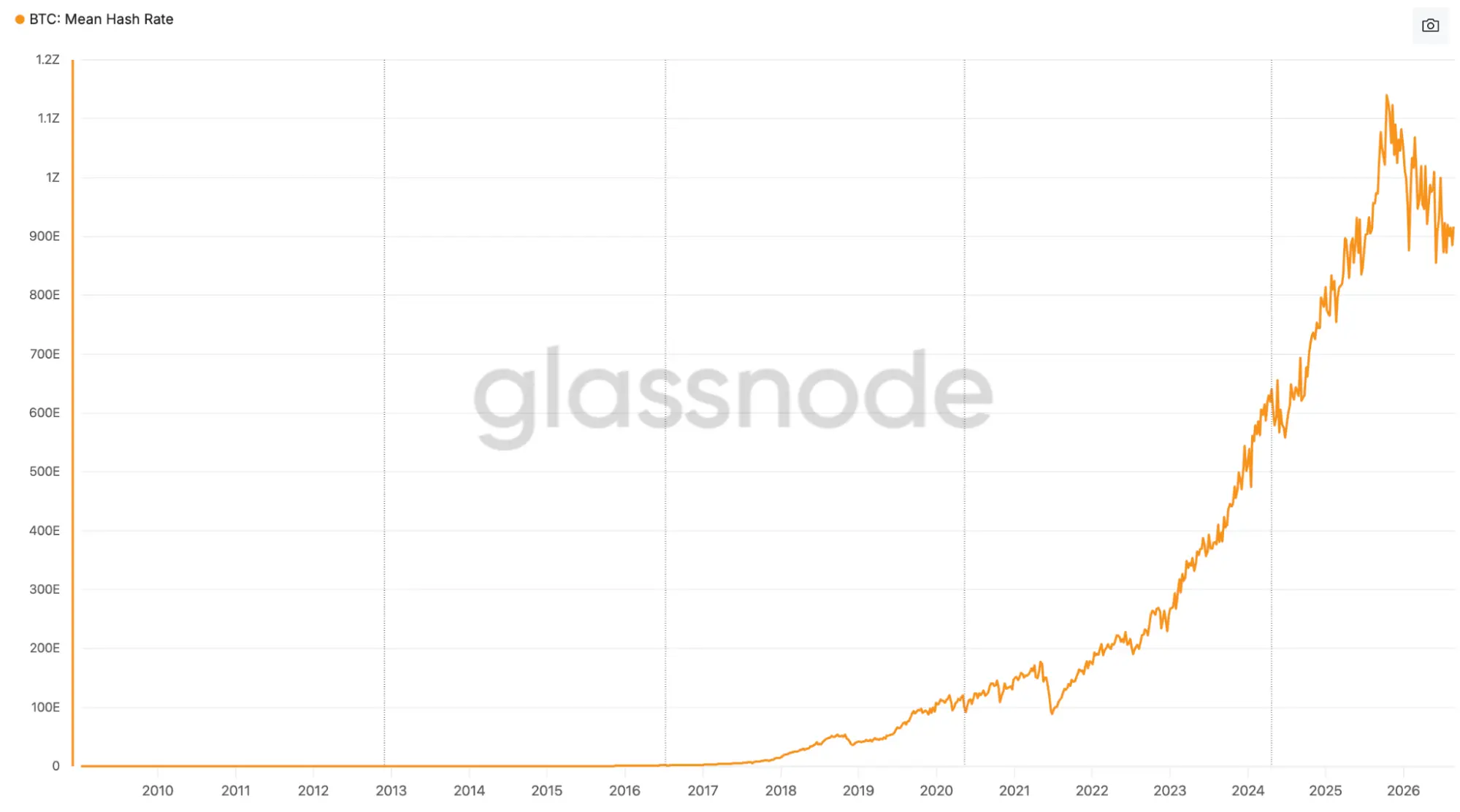
More important than the precise figures: this is the longest stretch in bitcoin's history in which the hashrate has failed to set a new high. The last prolonged hashrate downturn was in 2021, when it took more than 8 months to work through the dip. We're now heading towards 11 months.
Zagury argues that the backdrop of the current decline is different from earlier downturns, such as the one after the Chinese mining ban in 2021. Back then, mining equipment had to migrate to other countries. In the current dip, many machines would simply be unprofitable at the current price of BTC.
The AI boom may be having a double impact on the mining sector here. First, the investment hype around AI sucked investor capital away from bitcoin and into AI stocks. The result, of course, was a lower bitcoin price and thus falling revenues per miner. On the other hand, miners now had an alternative for the first time. They could relatively easily redirect the raw material for their computing capacity, electricity, to something else, namely AI tasks. And so the hashrate began a prolonged decline.
None of this, incidentally, is a problem. It's simply how a healthy market for computing power as a commodity functions, at a time when two major industries are competing for it.
3️⃣ Dutch cabinet shelves new box 3 tax law
Contribution by Erik
Leaked Budget Day documents reveal that the coalition is postponing the controversial capital gains accrual tax; and scrapping the accrual tax idea altogether is not inconceivable. So investors won't have to start paying 36 percent tax from 2028 on profits that exist only on paper. It's something of a sigh of relief...
The leaked budget documents show that the coalition has once again failed to reach agreement on the future of box 3. The Actual Return Act bill was still passed by the Lower House back in February, but is now most likely being shelved. The cabinet wants the Senate not to vote on it for the time being. That makes the chance of the new system taking effect in 2028 much smaller.
From accrual to realised gains
At the heart of the disagreement is the capital gains accrual tax: 36 percent on your paper returns. We dissected that system back in January. Anyone who watches their bitcoin rise has to find the money somewhere to fund the tax on that paper gain; for example, by selling off part of their BTC.
In this week's Satoshi Radio episode, the gentlemen pointed out who the now-shelved proposal would mainly have hit: not the Heineken family, but the newcomer. The current tax-free capital allowance of around 57,000 euros per person makes the first difficult steps of compounding tax-free. Whereas the stranded system would have replaced that with only about 1,800 euros of exempt return per person.
A right-wing majority, led by the VVD, now wants to ditch the accrual tax proposal and move straight to a full capital gains tax, where you only settle up when you sell.
The cost of the delay
The stalemate doesn't come cheap. As long as the current system continues, the treasury will miss out on more than 2 billion per year from 2028 onwards. And a possible capital gains tax can't be introduced quickly either: banks report that their systems can't be ready before 2029. A piquant detail is that as long as the accrual tax proposal formally sits with the Senate, the projected revenue remains on the books on paper.
Nothing changes for now
So for (crypto) investors, nothing changes for the time being: the deemed return stays, and anyone who makes less return than the deemed return assumes can use the counter-evidence rule to demonstrate their actual (lower) return.
On Budget Day, 15 September, the cabinet will have to confirm in black and white that the proposal is on hold and how the multibillion-euro gap will be covered. There's a good chance the bill will then disappear into the Dutch policy quagmire, heading towards a completely new legislative process.
🍟 Snacks
To wrap up, a few short snacks:
- Investors are once again pouring far more money into Southeast Asia's crypto sector. Blockchain companies in the region have already raised 680 million dollars this year, more than twice as much as in all of 2025. Notably, though, the number of investment rounds fell from 46 to 25. What's more, almost 60 percent of the amount raised came from a single round: Crypto.com raised 400 million dollars in July. So capital is returning, but it's mostly landing with a small(er) group of mature companies. Singapore remains the most attractive place to set up shop.
- The South Korean crypto market is showing signs of life again. Last week, the bitcoin price on Upbit was about 1 percent higher than on Binance. This so-called kimchi premium arises when local demand outstrips demand elsewhere; because of Korean capital restrictions, the price difference can't simply be arbitraged away. In early June, bitcoin in Korea was still up to 3.1 percent cheaper. The premium hasn't been positive for this long since the start of May; trading volume, for now, is only picking up sparingly.
- Correlation between bitcoin and gold at highest level since 2020. The 90-day correlation rose in August after both assets came into favour amid renewed concerns about financial repression. At the same time, the correlation with the Nasdaq dropped to its lowest level in a year, and bitcoin remains negatively correlated with the dollar. According to Bitwise, investors are increasingly placing bitcoin alongside gold in their portfolios, as protection against the erosion of the value of government money.
- Strategy doesn't look at the price when buying or selling bitcoin. CEO Phong Le defended this week the sale of around 7,000 BTC at roughly $60,000 and the recent purchases at around $80,000. The sale was necessary to fund the dividend on preferred shares; by now, Strategy can actually raise cheap capital again by issuing MSTR shares. According to Phong Le, the cost of raising capital is central to every transaction. That way, any purchase price can be rational, he argues; whether it's $50,000 or $150,000.
- A group of 21 major financial institutions wants to launch a dollar stablecoin. Among the parties are Goldman Sachs, Bank of America, Citi, Deutsche Bank, and UBS. They're setting up a new company this year and are aiming for a launch in the first half of 2027. At the first announcement in October last year, the consortium counted only ten banks. After the dollar, a euro stablecoin is also on the roadmap. The coins are intended to be used for, among other things, cross-border payments.
- Data breach at hardware wallet maker Trezor turns out to be far bigger than thought. Last month, Trezor reported that data from nearly 12,000 customers had been leaked via shipping partner ShipMonk. Now it turns out that another 67,000 US customers were affected. Their leaked data included name, email address, phone number, and home address. What stands out is that Trezor repeatedly received confirmation from ShipMonk that old order data had been deleted. Trezor's own wallets and systems were not affected. Keep a close eye out for targeted phishing in the coming period.
Thank you for reading!
To stay informed about the latest market developments and insights, follow our team members on X:
- Bart Mol (@Bart_Mol)
- Peter Slagter (@pesla)
- Bert Slagter (@bslagter)
- Mike Lelieveld (@mlelieveld)
We appreciate your continued support and look forward to bringing you more comprehensive analysis in our next edition.
Until then!