
The Christmas no one saw coming
A true story about the 1914 Christmas truce, when soldiers spontaneously stopped fighting. What this moment reveals about trust, human cooperation, and why that lesson is especially relevant now.
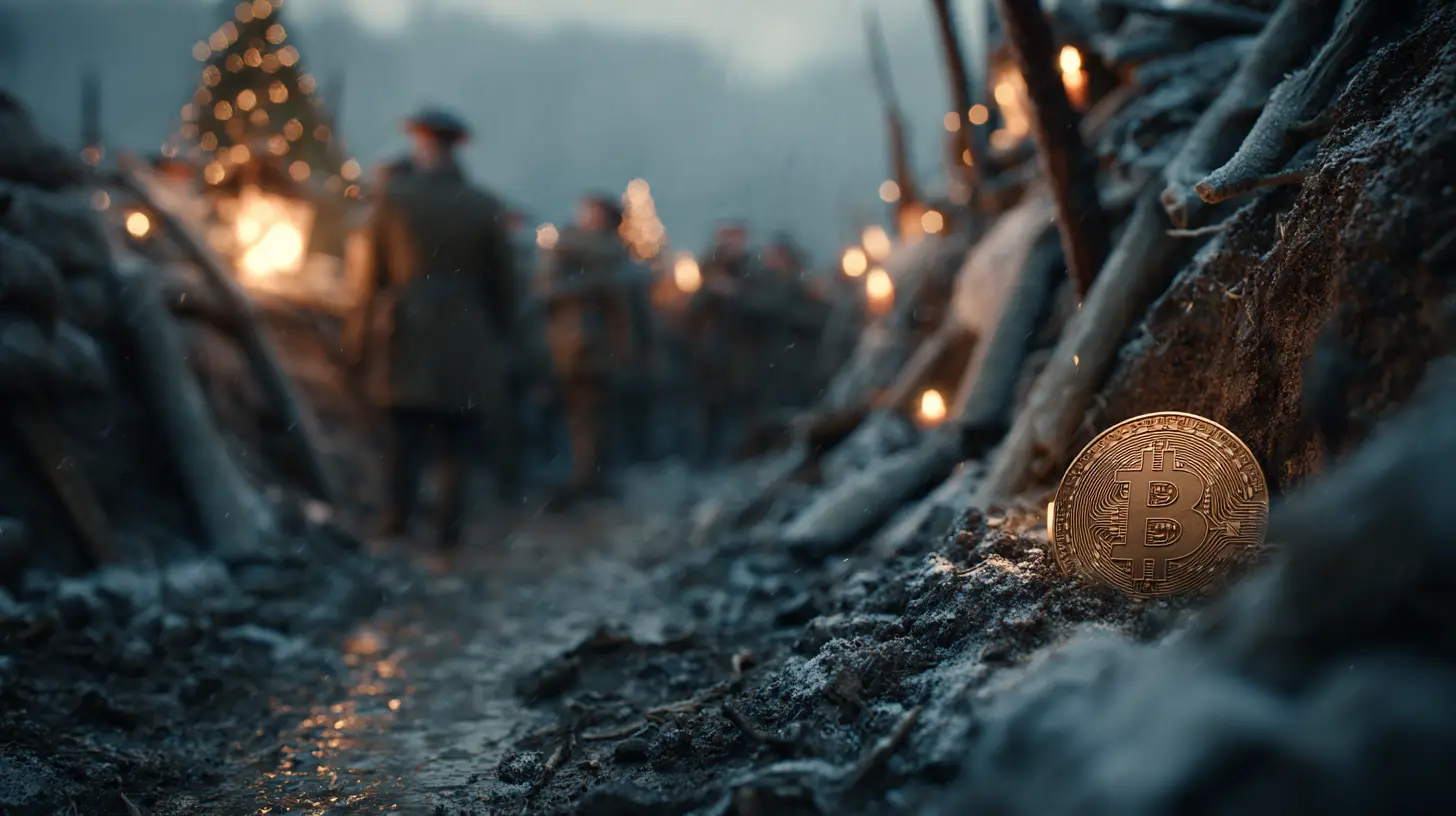
I'm sitting at the dining table, staring out the window. It looks gray, somewhat dreary, and cold. All around me, I hear that many people are walking around with runny noses or have been struck down by – yes, it still exists – the coronavirus. It's typical for the weeks before Christmas. We're ready for warmth and coziness, but we have to push through just a bit longer.
Somewhere in my gray matter, a hatch opened. The Christmas truces of 1914.
Back then, the cold also crept up slowly from the ground. Soldiers with wet boots. Stiff fingers. Breaths leaving little clouds in the air. Along the Western Front, December made its entrance the way only a wartime winter can: muddy, gray, and – emotionally – endless.
In the months before, there had been plenty of shooting. Sometimes fanatically, by soldiers themselves. And sometimes mechanically. The noise was part of it. It was so much part of the war that silence was suspicious. And yet, at some point, things got quieter. Not everywhere at once. Not by order. Just… less.
On the German side, light appeared. Candles. A Christmas tree. Soft singing. On the other side, men who were just as tired listened. Just as far from home. Someone sang back. Someone stuck his head above the edge of the trench. No shot. Another one. And then something happened that wasn't in any script.
Soldiers from both camps walked into no man's land. They shook hands. Exchanged cigarettes. Shared chocolate with each other. Photos of wives and children were swapped. There was laughter. There was even football played, between the craters and the barbed wire. Without the murderous orders, only people remained who recognized themselves in the other.
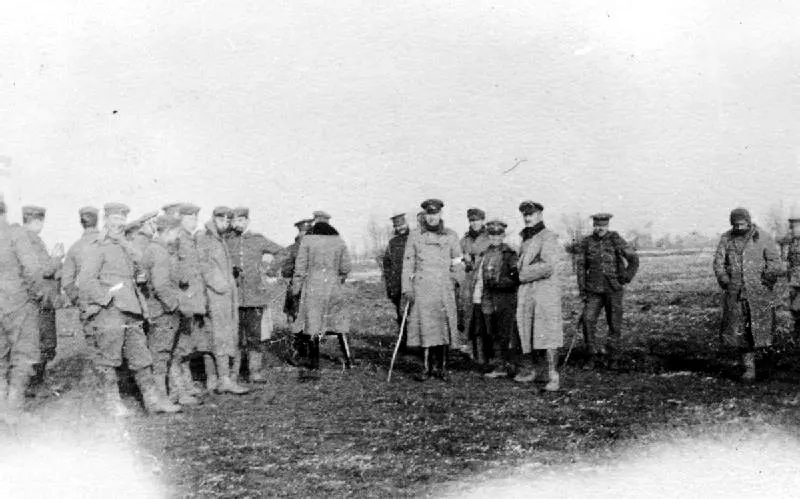
The Christmas truce of 1914 wasn't an official ceasefire, issued by a general. It was just suddenly there. The circumstances created an atmosphere of live and let live. That mood quickly shifted again, however, after officers intervened with orders to end the truce. It was unwanted because it undermined 'order.'
That's perhaps the most striking thing about this story. Not that it happened, but how quickly it was reversed. Systems don't handle well what they cannot control. Especially in times of conflict, a period when control is the highest priority.
And yet, suddenly there was a brief moment of authenticity. A spontaneous form of trust. Bottom-up, without central direction. People who followed unwritten rules precisely because they chose to do so themselves. You see that pattern more often throughout history. When pressure increases, when uncertainty grows, when large systems fail, small islands of cooperation emerge. Local, voluntary, temporary, but usually meaningful.
December is a month in which that instinct seems to rise automatically. The year is coming to an end and people are tired. The noise of daily life – economic, political, digital – is pushed somewhat to the background. There's a need for fewer stimuli, and more peace. For fewer empty promises, and more stability. For reflection, instead of plowing ahead.
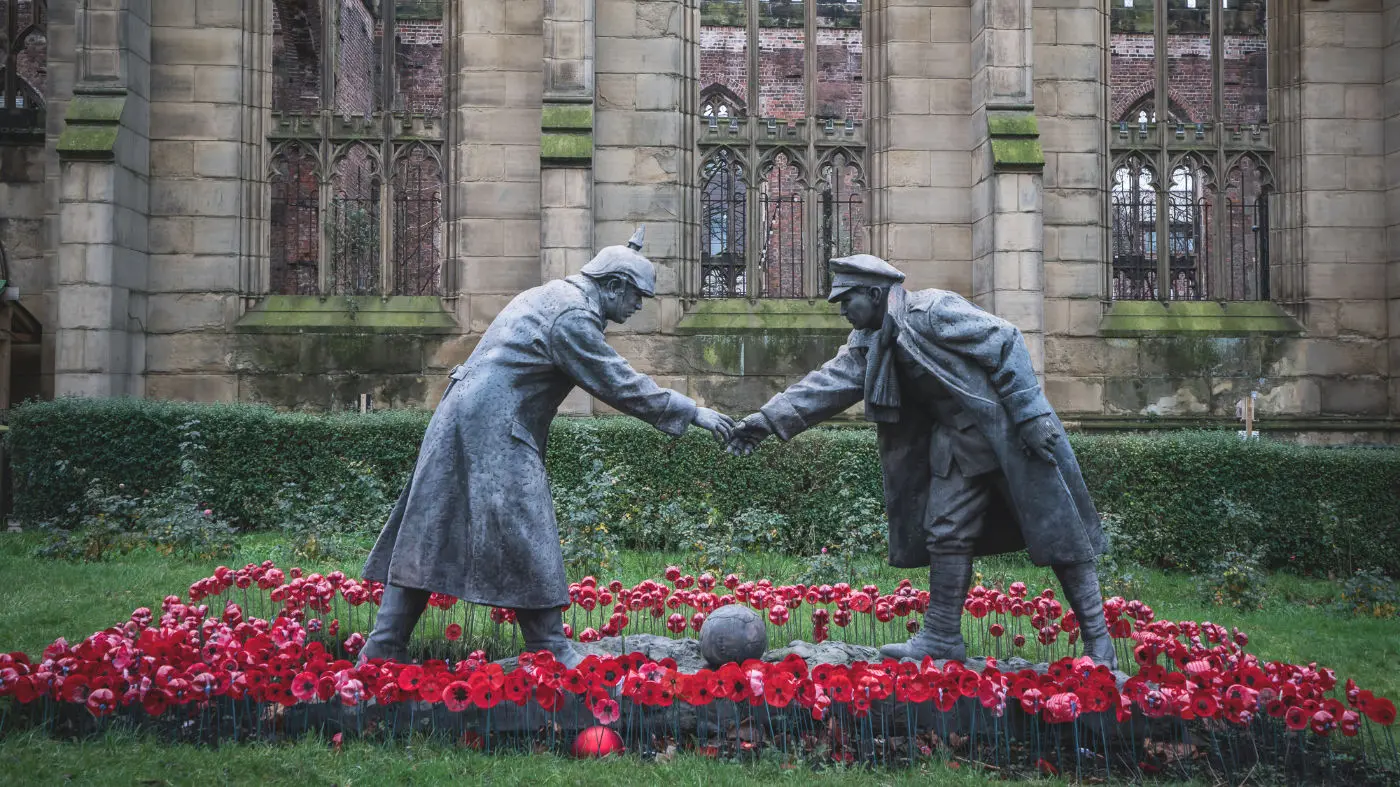

At such moments, how we look at systems also changes. At money. At trust. At the question of who actually makes the rules, and why we follow them.
Bitcoin fits into that list, especially on days like these. Not so much as a loud statement, or as an ideological weapon in a battle. But as a system that works because people collectively agree on the rules of the game. No central party that can intervene. No switch that gets flipped because it's more convenient. Just: agreements that remain valid, even when it gets uncomfortable.
Like that Christmas truce, bitcoin didn't emerge from perfectly planned harmony. It emerged from distrust in existing structures. From the desire to build something that keeps functioning when others let you down. That sounds big, but in practice it often feels small. Even calming.
The Christmas of 1914 didn't change the war. The trenches remained. The violence returned. But for a moment, it reminded everyone of something fundamental: that cooperation doesn't need an order. That trust doesn't always come from above. And that even in the darkest winters, people instinctively search for something that endures.
Only when the system stops do you see what lies beneath.
More Alpha
Are you a Plus member? Then we continue with the following topics:
- Do Kwon gets 15 (!) years in prison for Terra/Luna fraud
- Stablecoins shift to the center of the financial system
- Crypto walks into banking
1️⃣ Do Kwon gets 15 (!) years in prison for Terra/Luna fraud
 Contribution by
 Erik
A federal American judge has sentenced Do Kwon, the co-founder of Terraform Labs and creator of stablecoin TerraUSD (UST), to a staggering 15 years in prison. The judge called Kwon's actions "fraud on an epic scale." He was referring to the events surrounding the collapse of UST and its linked token LUNA in 2022. The collapse wiped out approximately $40 billion in value.
South Korean Do Kwon had already pleaded guilty to two charges: conspiracy to commit fraud and wire fraud. The judge said:
"This was a fraud on an epic, generational scale. In the history of federal prosecutions, there are few frauds that have caused as much harm as you have, Mr. Kwon."
The judge exceeded the prosecution's request (12 years) and thus sent a clear signal to future crypto founders with potentially less pure intentions.
South Korean Do Kwon, the creator of TerraUSD and Luna tokens, was sentenced to 15 years in prison for fraud after misleading investors and triggering crises in the crypto market https://t.co/IViyk8MLZL pic.twitter.com/PuBVMl9HWe
— Reuters (@Reuters) December 12, 2025
Read the verdict in a press release by the Department of Justice.
A public protocol – with bad intentions?
But did Kwon actually have bad intentions? Wasn't the design of the protocol, which was supposed to keep UST's value stable, simply public? As a refresher: UST stayed close to the $1 price (the 'peg') through an arbitrage mechanism where traders could always exchange 1 UST for $1 worth of LUNA (and vice versa). Crucial here is that to mint new UST, LUNA had to be 'burned.' High demand for UST thus meant a higher LUNA price.
In the bull market of 2021, there was massive demand for UST, driven by the 20% interest you could earn on UST in Terra's Anchor Protocol. And so a lot of Luna was burned, causing Luna's price to explode. But that price spiral could also work in the other direction, as became clear in May 2022.
My latest article is a post-mortem of the Terra/Luna crash:https://t.co/megEG67sOC pic.twitter.com/DGK1g8d0S4
— Lyn Alden (@LynAldenContact) May 15, 2022
What was the problem with this, according to the judge? In short: Kwon himself held a lot of LUNA and thus profited from its rise, partly by selling LUNA for other assets. According to the SEC complaint, Kwon at one point held 120 million LUNA, a pot that became worth more than $10 billion. The judge agreed with the prosecutor that Kwon misled investors. Not just to make Terra succeed, but mainly to pump the value of tokens he himself owned and thus pocket billions in value and control personally.
Another heavily weighing point where Kwon, according to the judge, engaged in deception was that UST already came close to a crash in 2021. Kwon made it appear as if the algorithm had restored the price, but in reality, a large, secret bailout by a trading firm had been necessary. In his plea deal, Kwon acknowledged this deception.
Domino of the bear market
The Terra crash turned out to be an important domino in the broader crypto meltdown that subsequently also dragged down Celsius and eventually FTX. After the implosion, Kwon went into hiding. He still appeared in the media, including on Cobie's podcast, where a guest reassured him, amid suppressed chuckling from those present: 'Jail isn't that bad'. Kwon traveled via Singapore to Montenegro, where he was arrested in 2023 with a fake passport. He was extradited to the US.
With his 15 years, Kwon joins the same list as other major convicted names from the 2022 bear market:
- Sam Bankman-Fried (FTX): 25 years in prison for large-scale fraud and theft of customer funds.
- Alex Mashinsky (Celsius): 12 years in prison for misleading customers about risks and reserves.
- Do Kwon (Terra): 15 years for misleading investors about the stability and recovery mechanism of a "transparent" algorithmic stablecoin.
Sam Bankman-Fried is the biggest villain in this list. He casually moved customer funds around. Mashinsky systematically lied about the health of his platform. Kwon is somewhere in between: he didn't literally touch customer funds, but he did sell the image of Terra as a robust and self-correcting platform for years. While he knew the system was vulnerable and had earlier needed hidden support to be saved. His boastful tweets added to that.
Deploying more capital - steady lads
— Do Kwon 🌕 (@stablekwon) May 9, 2022
Terra was in many ways radically transparent. The whitepaper, code, and on-chain mechanics were out in the open. Many smart followers genuinely believed this setup could work. In that sense, Terra was also a large public experiment with algo-stablecoins.
The judge isn't punishing the fact that the experiment failed, but how Kwon made it appear. A failed protocol isn't in itself a crime. It becomes fraud when you deliberately keep selling a much rosier story than you yourself internally believe. On that point, Kwon comes closer to SBF and Mashinsky than many Terra fans would like. For the crypto sector, the judge has set a precedent. Hiding behind "innovation" won't work if founders systematically lie about how the system works or what risks users face.
2️⃣ Stablecoins shift to the center of the financial system
Contribution by Erik
Stablecoins are making headlines so frequently these days that we could create a weekly column about them. The past few days also saw multiple telling signals: stablecoins have moved past the experimental phase and landed at the center of global payments. The news comes from both Europe and America.
The UK: stablecoin payments as priority
In the United Kingdom, regulator FCA announced that stablecoin payments should become a priority for 2026. In a letter to Prime Minister Keir Starmer, the regulator proposes that UK-issued stablecoins be allowed as a means of payment. There should also be a regulated 'sandbox' where parties can safely experiment with issuing and using stablecoins.
This proposal is explicitly framed in terms of growth and competitiveness for the British financial sector. Where a few years ago it was all about risks, the credo is now: we're going to use stablecoins to make payments faster and more convenient.
UK financial authority to prioritize stablecoin payments in 2026 https://t.co/54j0ecSxrm
— The Block (@TheBlock__) December 11, 2025
Italy: Bancomat wants stablecoin for international payments
On the continent, Bancomat announced plans for a euro-stablecoin that falls under MiCA and should serve from 2026 as a building block for direct, cross-border payments. Bancomat is the Italian network of debit and ATM machines. The project is being launched in cooperation with, among others, Spain's Bizum.
Bank of America: buy rating for Visa because of stablecoins
Recently, Bank of America upgraded its rating for Visa from neutral to buy, partly because Visa is already experimenting with payouts in USDC stablecoins and is thus, according to analysts, well positioned for the next phase in international payments. This also shows a shift in narrative: stablecoins are no longer seen as opponents of banks and card networks, but as a technology that can be integrated.
Visa is the clear network of choice for stablecoin-linked cards https://t.co/B8hZjc0JZr
— Cuy Sheffield (@cuysheffield) December 8, 2025
All in all, these developments show: regulators and large payment networks are no longer debating whether stablecoins will stay, but how they will find a place at the center of the existing financial system.
3️⃣ Crypto walks into banking
 Contribution by
 Peter
The news sounded bigger than it appears at first glance. Five major crypto parties received a national banking license in the United States. BitGo, Circle, Fidelity Digital Assets, Paxos, and Ripple may now operate as so-called trust banks, under the supervision of the national banking regulator OCC. They haven't become commercial banks that create credit or offer savings accounts. But they do get a formal place in the banking system.
🏦 POLICY: Five Crypto Firms Win Initial Approvals as Trust Banks, Including Ripple, Circle, BitGo @sndr_krisztian & @jesseahamilton report:https://t.co/4oAuIl5R8H
— CoinDesk (@CoinDesk) December 12, 2025
That distinction is important. But equally important is the question of why this was actually necessary.
For years, crypto existed in an awkward in-between space. Too big to ignore, too important to stay outside the financial system, but without an appropriate institutional framework. That friction was especially felt in places where risks are not technical but legal and organizational in nature.
Take custody. Large institutions are happy to hold bitcoin or other digital assets, but only if there's one party with ultimate responsibility. No patchwork of subcontractors, no gray areas between tech company and bank. As long as there were no federally recognized trust parties with an explicit crypto mandate, custody remained a structural barrier.
The same goes for stablecoins. Billions in dollar reserves were managed by companies that functioned as banks but legally weren't banks. That works, as long as things are calm. But in stress moments, it can be a problem. Not because the backing is necessarily missing, but because no one can precisely point to which supervisory framework is decisive.
The growth of tokenization also ran at a lower gear because of this. Everyone sees the potential of digital representations of stocks, bonds, and funds. But recording ownership requires more than code. It requires fiduciary structures, administration, settlement, and supervision. Without bank-grade infrastructure, tokenization remained stuck in experiments.
And so this news turns out to be about an important puzzle piece. It's not that crypto has become "bankworthy" in the classical sense. But the financial system finally has an appropriate vehicle to accommodate crypto. These trust charters fill a void that became increasingly painful as crypto matured.
2025: The year regulators quietly rewired crypto's future.
— Frank Chaparro (@fintechfrank) December 14, 2025
- OCC conditionally approves five national trust bank charters
- OCC clears US banks for riskless crypto trading
- CFTC launches tokenized collateral pilots with BTC, ETH, and USDC
2026 will have an entirely different…
Crypto didn't need banks to come into existence. But the financial system needs banks to seriously embrace crypto. Or to encapsulate it; it just depends on how you look at it.
🍟 Snacks
To wrap up, some quick snacks:
- Binance embraces Trump stablecoin USD1. The stablecoin from World Liberty Financial is going to play a prominent role in the Binance ecosystem. The coin gets new trading pairs, replaces collateral for existing tokens, and will be used in internal systems of the exchange. The timing stands out: shortly after CZ's presidential pardon and in a period when stablecoins are becoming increasingly explicitly geopolitical.
- OCC gives American banks green light for crypto trading. The American banking regulator has confirmed that national banks may facilitate transactions and even act as intermediaries. Concretely: banks may buy and sell crypto on behalf of customers, provide liquidity, and settle transactions, as long as risk management and compliance are in order. It's not a free pass for speculation on their own balance sheet, but it is a normalization of crypto as a financial product.
- Payment giant Stripe absorbs team behind crypto wallet Valora. It's a so-called acqui-hire: the technology and experience are central, not the product itself. Valora was known for simple stablecoin payments via smartphone, often as an alternative to traditional banking. For Stripe, this fits well into the broader strategy around stablecoins and cross-border payments. The message is clear: stablecoins embody the next phase of digital payments.
- PNC Bank opens direct bitcoin trading for wealthy clients. The American major bank now offers private banking clients spot trading in bitcoin, directly within the banking environment. It's a small but telling step: precisely this conservative client segment only gets access once compliance and custody are fully checked off. PNC Bank operates in 27 American states, with nearly 2,700 branches and 10,000 ATMs.
- DTCC gets green light to experiment with tokenization. The American securities processor received a so-called no-action letter from the SEC. It wants to test tokenized versions of stocks and funds in a controlled environment, and now knows: the SEC won't intervene. The DTCC forms the backbone of Wall Street and processes trillions in transactions daily. The SEC's decision is seen as a green light: tokenization may shift from theory to infrastructure.
- JPMorgan also chooses public blockchain networks. The bank tested for years with digital assets on its own, closed infrastructure. In 2025, the bank seems to have made the choice to switch to public networks. That started with the issuance of deposit tokens on Base, and is now being expanded with activities on Solana. What's notable is that it's no longer just about payments, but also about regulated capital market instruments.
- Interactive Brokers places stablecoins next to the bank account. The American broker lets clients directly fund their investment account with stablecoins, without a bank as intermediary. What stands out: this isn't coming from a fintech, but from an established player that also offers stocks, options, and futures. Globally, Interactive Brokers has more than 4 million clients, collectively accounting for hundreds of billions in invested capital.
Thank you for reading!
To stay informed about the latest market developments and insights, follow our team members on X:
- Bart Mol (@Bart_Mol)
- Peter Slagter (@pesla)
- Bert Slagter (@bslagter)
- Mike Lelieveld (@mlelieveld)
We appreciate your continued support and look forward to bringing you more comprehensive analysis in our next edition.
Until then!