
Meta Steps Into a Sensitive Arena — Again
Meta is building Arena, a prediction markets app. The parallels with Libra reveal why this is politically, legally, and strategically explosive territory for a company of Meta's scale.

 Contribution by
 Peter
Mark Zuckerberg has found a new toy. Meta is working on Arena, a standalone prediction markets app that encourages users to consult their inner oracle. They might weigh in on election outcomes or sports matches, the result of interest rate decisions, or which direction economic indicators are heading. According to The New York Times, Arena would initially not involve real money, but points instead. Wagering hard dollars or euros could come later.
That sounds like exactly the kind of detail where Zuckerberg's idea could fatally stumble. Because the moment Meta gets involved with prediction markets, it's no longer just about a new app. It immediately becomes a question of whether a company with billions of users should be allowed to layer an addictive gambling mechanism on top of news, sports, politics, and financial markets.
Meta copied slot machines to addict kids to Instagram. Now Zuckerberg is turning his company into a prediction market. Meta's business model is profiting from addiction—kids, gamblers, & more. Stop it through KOSA & my prediction markets bills. https://t.co/e9tG1X8Fho
— Richard Blumenthal (@SenBlumenthal) June 23, 2026
It's a dynamic we've seen before. In 2019, Facebook unveiled Libra. The promise was grand. A digital currency for the entire world, plugged into Facebook's, WhatsApp's, and other services' existing reach. Sending money was supposed to become as easy as sending a photo, anywhere on the planet. A user-friendly payment network that could reach billions of people overnight.
 Rory Cellan-Jones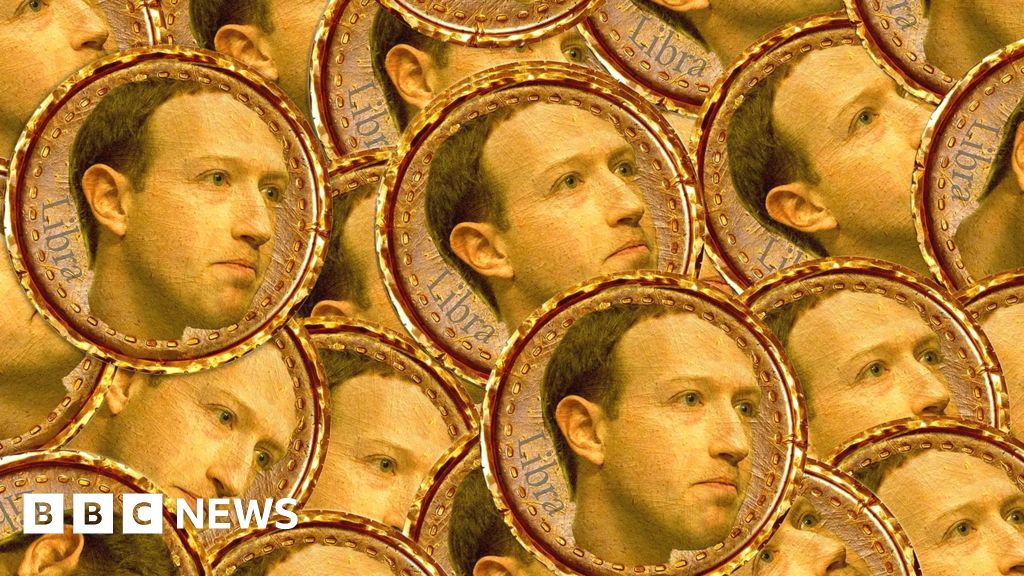
The intended scale is where things went wrong. For central banks, regulators, and politicians, Libra was suspect from day one. They saw one of the world's largest companies trying to issue its own money, complete with infrastructure the state had little control over. The project stalled under political and legal pressure, and was reluctantly rebranded to Diem — stripped down, relocated, delayed, and ultimately sold off. The lesson was clear: Meta is too big to experiment with money.
For Arena, a similar trap appears to be waiting.
Prediction markets are hot, and Zuckerberg spotted that correctly. Polymarket and Kalshi have proven that people want to trade on the outcome of all kinds of events, and that their collective forecasting has genuine predictive value. That appeal has even set a giant like Charles Schwab into motion, partnering with Cboe to issue contracts on the S&P 500. But Schwab stays neatly within established lanes. It starts with financial markets, via existing infrastructure, with a product that resembles a simple option: does the index finish above or below a certain level?
Meta will have a much harder time presenting Arena as an extension of the financial market. At a company that lives on attention and engagement, the very same product takes on a different character. Even if Arena starts with points instead of money, the political question immediately arises: when does a game become a gambling product, and when does a gambling product become a platform problem?
And this is happening at a moment when prediction markets, legally speaking, are far from settled. In the United States, states and federal regulators are fighting over what they actually are. Financial contracts? A casino in disguise? Something in between? There are currently nine cases (!) in which this distinction is at the center. That's the Arena Meta is stepping into.
 The Defiant Team
It looks like classic Zuckerberg timing. Meta is too late to be considered a pioneer — that ship has sailed, with Polymarket, Kalshi, and crypto companies on board. But the company is also too early for the safe, regulated version that will likely emerge eventually.
The question isn't whether Meta can build this; of course Meta can build this. The question is whether Meta can still build anything small enough not to immediately become a political problem. There's a good chance a prediction market on exactly that question will open at one of the competitors before long.
More Alpha
Are you a Plus member? Then we continue with the following topics:
- Ethereum Foundation cuts budget by 40%, moves toward endowment model
- Japan overhauls its financial system, looking to the crypto world for inspiration
- 3️⃣ US lobbying efforts (midterms) are paying off
Below that, you'll find the news snacks — a handy overview of the news that actually mattered last week.
1️⃣ Ethereum Foundation cuts budget by 40%, moves toward endowment model
 Contribution by
 Erik
The Ethereum Foundation (EF) has laid off 54 employees, roughly a fifth of its staff. The 2026 budget has been cut by approximately 40%. It's hardly a surprise: at the end of May we already wrote that Vitalik Buterin wanted to make the EF "smaller, leaner, and less dominant." This is putting action behind those words. It's another step in the maturation of the organizational structure around Ethereum. Whether this move leads to fragmentation remains to be seen.
Endowment model
The Ethereum Foundation holds roughly 180,000 ETH in its treasury. That won't last forever. After more than ten years of spending like a startup, the foundation is entering a new phase. Sure, the roadmap isn't complete yet, but the days of burning through ETH (pun intended) are over. The EF aims to reduce annual spending from about 15% to roughly 5% of the treasury by 2030.
This means the foundation is opting for an endowment model, comparable to what university endowments like Harvard's do. The idea is to live off the returns on your assets rather than spending down the assets themselves. In principle, the pot can then last indefinitely.
Vitalik:
"The EF will be a smaller ship than in previous years, a more opinionated ship – [...] – but a ship with a longer lifespan, and a ship that is fit to ensure that Ethereum contributes something to the world."
Absorbing the cuts
The EF's new financial discipline inevitably leaves gaps.
The teams that maintain Ethereum's base layer are seeing two revenue streams dry up. Partly from the EF itself, and on top of that the so-called Client Incentive Program, which expired in April and funded teams with staking revenues.
Trent Van Epps, until April the coordinator of these development teams, estimates they collectively need about $40 million per year. He describes it not as an acute crisis, but as a creeping deficit that could become critical within three to nine months. The existing alternative, Protocol Guild, has distributed over $33 million since 2022, but relies on voluntary contributions — meaning there's no fixed budget.
One of many guardians
The reorganization is taking place against a backdrop of dismal prices and muted sentiment in the community. Because markets don't like uncertainty, it's good that the foundation has made decisive calls. That the EF is making itself less important is now definitive. And such an act of self-sacrifice is something very few organizations are capable of. Is this a laudable achievement of decentralization, or rather unnecessary fragmentation? There's a real risk of a power vacuum, which the aforementioned Trent Van Epps also points out:
"While I appreciate the effort to prevent accumulation and abuse of power, legitimacy has a persistent tendency to concentrate in one place. That is to say, there is still only one organization with the scale and legitimacy of the EF."
The EF is now positioning itself no longer as the "primary guardian" but as "one of many guardians." And other candidates are stepping up. Five former EF researchers launched Ethlabs, an independent research and development organization, backed by Joe Lubin and BitMine, among others.
It remains to be seen whether the EF's less prominent role will hinder a steady course. The bottom line is this: Ethereum as an organization is maturing, demonstrating that decentralization remains a key pillar, with financial discipline as the new modus operandi.
2️⃣ Japan overhauls its financial system and draws inspiration from the crypto world
Contribution by Peter
Japan is working on a sweeping overhaul of its financial infrastructure. That sounds boring, and... in a way it is. But in the plumbing of the financial system you can sometimes see where the world is heading more clearly than — especially in a bear market — in the prices on a chart.
The core: Japan wants to make its legacy payment system ready for digital money. In doing so, it has clearly looked at a number of working building blocks from the crypto world, including the integration of stablecoins and tokenized deposits, and support for transactions that can be settled 24 hours a day.
 Norbert Gehrke
A central role is reserved for Zengin-Net, Japan's interbank payment system. It has existed for over fifty years and serves as Japan's financial base layer. But that base layer is outdated. The result is that maintenance keeps getting more expensive, new requirements are difficult to integrate, and new payment methods fit increasingly poorly into the old design.
That's why Zengin-Net is building new infrastructure, set to be completed by 2030. First up are real-time payments and payments via mobile numbers. After that come features like payment requests, QR payments, and connections to foreign payment systems. The system needs to be flexible enough to also support payments with stablecoins and tokenized deposits. The latter are simply bank balances that circulate as tokens.
 The Defiant Team
On the securities side, progress is also being made. Japan Securities Clearing Corporation (JSCC), the entity that administers securities and derivatives transactions, wants digital collateral to be used more efficiently. JSCC also looked to the crypto world and landed on the atomic swap: an operation in which two assets are exchanged simultaneously. For example, cash out, government bonds in — without either party having to temporarily hold double collateral. Professional players, who routinely have enormous sums tied up in collateral, are naturally keen on this.
The financial world is increasingly adopting components from the crypto world. That doesn't make it decentralized, but it does make it more efficient. With every overhaul, crypto components are adopted and set in concrete. It's a slow process that is gradually bringing both worlds closer together.
3️⃣ US lobbying efforts (midterms) are paying off
Contribution by Peter
The midterms are, as the name suggests, interim congressional elections held in the middle of a president's term. They always take place on the Tuesday after the first Monday in November. Midterm elections can be seen as a barometer for a sitting president's policies. But it goes beyond a mere popularity contest: the entire composition of the House and a third of the Senate is at stake.
You can imagine that lobby groups throw their full weight behind this. Because a shifting composition of the political chambers represents both an opportunity and a threat. For the sitting president, who wants to keep executing his policy agenda. But also for the overall stance on specific issues, like crypto.
The crypto industry's lobby groups have been working on the midterms for some time now. Their efforts, which mostly play out behind the scenes, are starting to show their first visible results.
In a series of primary elections in Maryland, New York, and Utah this week, several crypto-friendly candidates came out on top. These primaries are often more consequential than the general election in November. In the major Democratic and Republican districts, it's already being decided now who will represent the party in Washington.
THE BLOCK: Adrian Boafo, supported by Fairshake crypto PAC, won the Democratic primary race in Maryland, per AP projections. Meanwhile, crypto-friendly incumbent Rep. Dan Goldman lost the primary in New York to Brad Lander. pic.twitter.com/1fDkCQ2W7U
— The Block (@TheBlockCo) June 24, 2026
The most notable victory was that of Adrian Boafo. Boafo is 32, a state legislator in Maryland and former campaign manager for Steny Hoyer, the Democratic veteran he now hopes to succeed. Hoyer served decades in the House of Representatives and was for years one of the most powerful Democrats in Washington. Boafo received $5.5 million in 'support' from Protect Progress. That's a so-called super PAC affiliated with crypto's Fairshake that primarily backs Democratic candidates.
Fairshake is investing this way in a young politician who will likely be around for a long time. Boafo already introduced pro-crypto legislation in Maryland and wants digital assets to become mainstream in the context of wealth building and economic innovation. That's exactly what the industry wants to hear in Washington.
This pattern was visible elsewhere too. Ritchie Torres, the Democratic representative from New York and one of the loudest pro-crypto voices in Congress, won his primary easily with support from Protect Progress and other crypto donors. In Maryland, April McClain Delaney received backing because she voted favorably on key crypto legislation. And in Utah, Fairshake's Republican arm, Defend American Jobs, helped incumbent congressman Blake Moore get through his primary.
You can see it: lobbying power that plays the entire political field. And that's no bad thing. Should Trump's power be curtailed after the midterms, the industry has every interest in making sure important dossiers don't stall. For that, it needs support from both sides of the aisle.
🍟 Snacks
To wrap up, some quick snacks:
- Clarity Act faces pushback from law enforcement. The sticking point is the provision that prevents DeFi developers from being classified as payment institutions. Law enforcement agencies fear the exemption is too broad and helps criminals with money laundering, sanctions evasion, and fraud. They're getting support from the Catholic Church, which fears the clause could lead to an increase in fraud and human trafficking. With time running short and such sticking points still unresolved, Galaxy Digital has lowered the odds of passage in 2026 to 50/50.
- Binance shuts its doors to EU customers. Customers in Poland, Italy, Spain, and France have been asked to withdraw their funds from the exchange. The company failed to obtain its MiCA license in time. Starting Wednesday, unlicensed firms are no longer allowed to offer services within the EU. Binance had been counting on a sign-off from the Greek regulator, but unexpectedly pulled the plug on its application at the last minute. Binance says Europe remains important and that it's doing everything to serve the market in a legitimate manner.
- Indonesia formalizes crypto and cracks down on the promotional layer around it. The Indonesian parliament wants the local crypto industry to become more attractive and competitive. It aims to stimulate innovation in this domain and has given the main regulator the authority to oversee that process. Activities like staking, lending, and pledging are specifically mentioned. At the same time, oversight of marketing activities is being tightened, with finfluencer behavior as the main pressure point. They should be subject to criminal prosecution.
- US bitcoin funds are heading for their worst month ever. In June, investors have already pulled $4.1 billion. Of that, $3 billion came from BlackRock's fund IBIT. This week marks the seventh consecutive week of red numbers. In total, more than $7.7 billion has flowed out of the funds during that period, though they collectively still hold over $72 billion in bitcoin. The average IBIT investor is down 40% according to Bloomberg. ETF expert Nate Geraci calls it a "brutal reality check on bitcoin for the retail investor."
- MiCA turns Europe into a single crypto market, but only for firms that can afford and bear the license. According to ESMA, as of May only 210 of over 1,200 registered crypto firms had obtained a full license. Smaller providers in particular are hit hard by MiCA's complexity. Consumers get a safer market, but also less choice. For Dutch investors, this is a good time to check whether their provider is on the AFM list of MiCA license holders.
Thank you for reading!
To stay informed about the latest market developments and insights, follow our team members on X:
- Bart Mol (@Bart_Mol)
- Peter Slagter (@pesla)
- Bert Slagter (@bslagter)
- Mike Lelieveld (@mlelieveld)
We appreciate your continued support and look forward to bringing you more comprehensive analysis in our next edition.
Until then!