
Let Ambitious Prove It's More Than Just a Bitcoin Fund
Ambitious wants to prove bitcoin can be more than an investment. But for that to happen, the AFM will have to give the company the room it needs to actually do business.

 Contribution by
 Peter
The Dutch company Ambitious wants to go public in order to buy bitcoin at scale and put it to productive use. And it chose the hardest possible route to get there. It didn't take over an empty shell company, it didn't hide its plans behind a complicated structure, and it didn't seek refuge in a foreign jurisdiction. Just a clean company heading to Euronext Amsterdam, under the supervision of the AFM and guided by established names from the banking sector. The royal road, no shady detours.
The path it took ended up in court, where a judge must now rule on a dispute between Ambitious and the regulator. Last Wednesday, the parties faced off at the Palace of Justice in The Hague.
The case revolves around the question of what kind of company is actually being set up here. According to the AFM, this is an investment institution, because the company raises money to invest in bitcoin and the returns for shareholders largely track the bitcoin price. Ambitious, on the other hand, sees itself as an operational bitcoin company. Bitcoin isn't the end product, nor a goal in itself, but the working capital used to generate income.
That distinction may seem like semantics, but it determines what the company will be allowed to do going forward.
An investment institution raises money to invest it on behalf of participants and to manage it carefully according to pre-agreed terms. That model can fit a bitcoin fund perfectly. It just doesn't fit a company that wants to operate within the bitcoin economy at its own discretion. A company that wants to actively deploy bitcoin to facilitate payments or credit, to provide liquidity, to build infrastructure around the lightning network for example, or any other future application that requires bitcoin and generates cash flow.
The AFM doesn't find that all that relevant. After all, up to now Ambitious has mainly raised capital and bought bitcoin. The operational activities exist largely on paper. Anyone looking solely at the current assets and income is more likely to see a bitcoin fund than a mature fintech company.
And so a fresh chicken-and-egg problem was born. Ambitious's intended activities need scale to generate meaningful cash flows; without stock market capital, there's little point in getting them off the ground. And then the absence of those very activities is put forward as proof that Ambitious isn't an operational business.
A new company, whether capital-intensive or not, can hardly be judged as if it has already executed its ten-year plan. So one way or another, the assessment leans largely on the entrepreneur's plans. You're free to be skeptical about those, of course. Some of the applications Ambitious mentions are young, technically complex or still limited in scale. It's by no means a given that they can generate enough revenue.
The AFM has important duties when it comes to the planned IPO. It must ensure that investors are informed fully and correctly. It has to prevent misleading claims, expose conflicts of interest and check whether the risks are sufficiently visible. But in this case it's taking on an extra, self-appointed role: that of the party deciding whether a new business model is commercially viable. It has sat down in three chairs at once: regulator, entrepreneur and investor.
This is precisely what the prospectus is for. In it, Ambitious must describe not only its ambitions, but also the uncertainties. How much income can the various activities generate? What technical, legal and financial risks exist? How dependent will the company remain on the bitcoin price for the time being? What happens if the operational strategy fails to take off? On that basis, everyone can form their own judgment.
Anyone who finds the plan unconvincing doesn't have to buy a share. But anyone who buys into the vision should be able to gain exposure to it safely. A market for new technologies doesn't emerge through a regulator that first demands certainty about the revenue model. Innovation happens where entrepreneurs are given room to execute their plans and investors are willing to bear the accompanying risk.
Let Ambitious prove it's more than a bitcoin fund. If the operational activities never materialize and Ambitious ends up behaving like a passive bitcoin fund in practice, then the AFM has plenty of tools to step in after all. Permission to get started, after all, doesn't mean the oversight stops.
The ruling is scheduled for September 8.
More Alpha
Are you a Plus member? Then we'll continue with the following topics:
- S&P launches a crypto index without bitcoin?!
- Ethics rules meant to push the Clarity Act over the line
- Bitcoin's quantum threat is drawing in millions
Below that come the news snacks, a handy overview of the news that really mattered this past week.
1️⃣ S&P launches a crypto index without bitcoin?!
 Contribution by
 Erik
On July 21, S&P Dow Jones Indices and investment firm Pantera Capital launched the S&P Pantera Digital Asset Index (ticker: SPPDA). It's a benchmark aimed at institutional investors. The index contains 18 crypto tokens, selected on the basis of their protocol revenue. Because of that criterion, bitcoin isn't included. It's the second crypto index S&P has launched together with a market player, but the first to select on the basis of project characteristics.
BULLISH: S&P Dow Jones is launching new crypto index:
— Altcoin Daily (@AltcoinDaily) July 25, 2026
Top digital assets include:
Ethereum $ETH
BNB $BNB
Solana $SOL
TRON $TRX
Hyperliquid hyperliquid:native
S&P Dow Jones Indices CEO Catherine Clay explains why the company is expanding deeper into crypto: pic.twitter.com/Rt1ztdPBPG
Most crypto indices look at market capitalization. The S&P Pantera index also draws a lower bound there, but it has an additional criterion: a protocol must 'make money'. Only tokens whose underlying protocol demonstrably and continuously — over the two most recent quarters — generates income are eligible. That revenue is measured by data provider Artemis Analytics, which only counts fees as protocol revenue when they flow back to token holders. For example via staking or fee burning, as is the case with ether.
A basket of 18 tokens
The result is a basket of 18 tokens, weighted by market capitalization, with a cap of 35 percent for the largest position and 20 percent for all the rest. The five biggest positions are ether, binance coin, solana, tron and hyperliquid.
The fact that hyperliquid is in the top five ties in with a signal from last week. Asset manager T. Rowe Price included HYPE in its new actively managed crypto ETF, with a notably high weighting of 6 percent. That ETF uses no revenue criterion, yet independently arrives at the same name. Hyperliquid is evidently in demand in the institutional world.
Bitcoin not eligible
The most striking consequence of the revenue criterion is that bitcoin isn't in the index. The bitcoin protocol doesn't generate protocol revenue according to data provider Artemis's definition. Bitcoin doesn't do staking or fee burning. True, bitcoin has transaction fees for miners, but those don't flow back to BTC holders. And that's what Artemis counts as revenue.
Memecoins are also excluded from the index. But bear in mind that memecoin trading activity is right there in the index through the back door. A hefty chunk of Solana's protocol revenue comes from memecoin trading, and the same goes for Hyperliquid as a trading platform.
2️⃣ Ethics rules meant to push the Clarity Act over the line
Contribution by Erik
This week the White House unveiled an ethics package intended to remove the final obstacle to the Clarity Act. The legislative text is on the table, but Democrats aren't satisfied, and Senate Leader Thune doesn't expect a vote before the recess anymore.
The Clarity Act is meant to create, for the first time, a clear federal framework for the U.S. crypto market, with clear rules on which digital assets fall under the SEC and which under the CFTC.
On Monday, a White House official reported that President Trump had agreed to "the most comprehensive ethics provision in history". That provision had been one of the biggest sticking points for months: several Democratic senators refuse to back the crypto market law as long as it doesn't put a stop to the Trump family's conflicts of interest. Last year those were good for more than $1.4 billion in income, as we described recently.
 Jesse Hamilton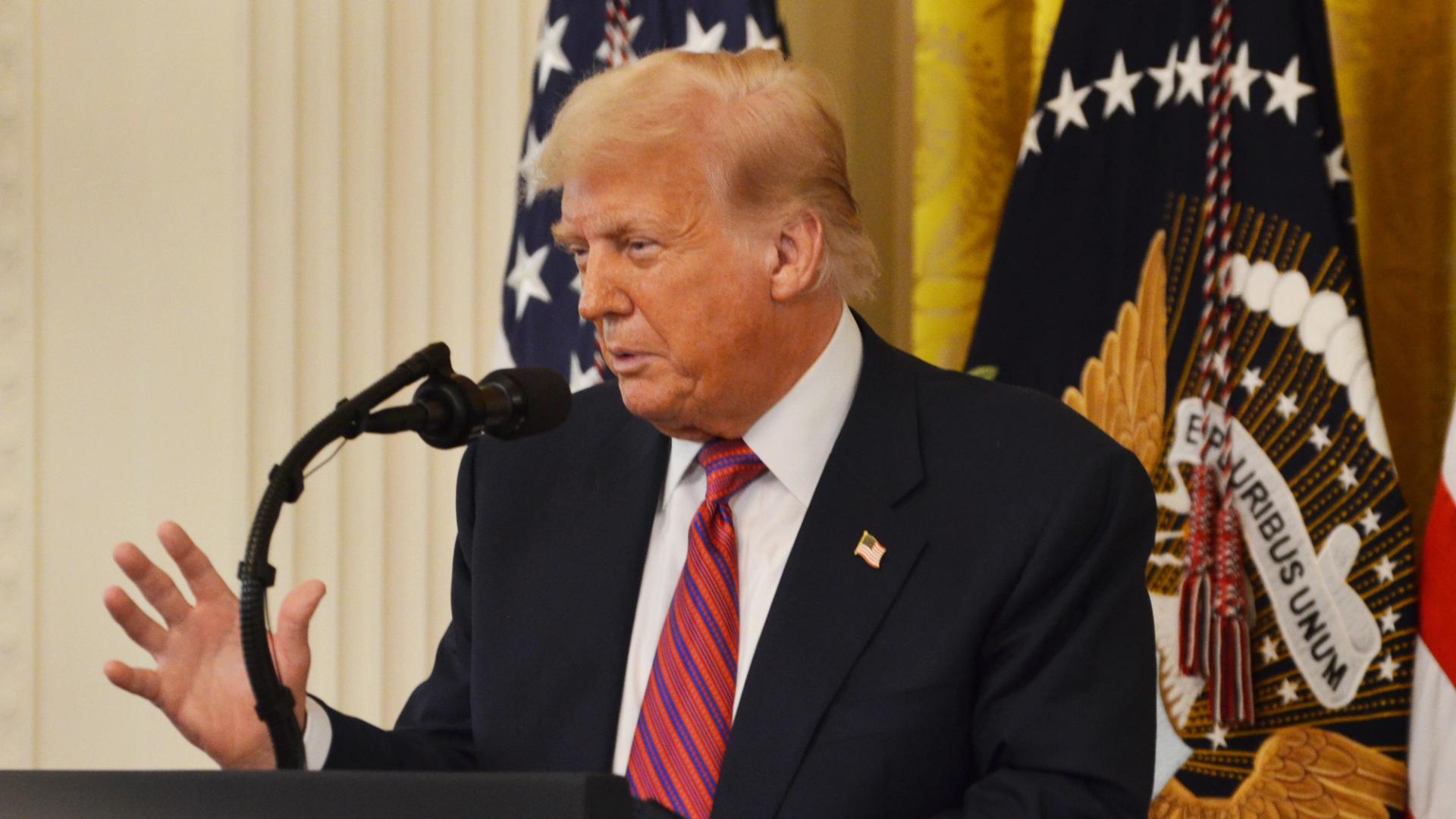
What's in it now
On Wednesday, Senator Lummis published the updated legislative text. The ethics provision is meant to ensure that a president can't launch memecoins. More precisely: the provision bars the president, vice president, members of Congress and their spouses from issuing or sponsoring tokens for payment during their term in office. Existing crypto holdings must be sold within a year of the law taking effect, or moved to a blind trust; a place that makes them temporarily inaccessible.
"Not a serious offer"
The crypto-friendly Democrats, who are needed to reach the required 60 votes, reacted dismissively. Senator Alsobrooks called it "not a serious offer" that, of all people, Trump's own attorney general should be the one to enforce the rules. Elizabeth Warren published an analysis in which she picks the provision apart:
"Donald Trump has pulled more than $1.4 billion out of the crypto world, and this bill does nothing to prevent him from raking in his next $1.4 billion in profits. And even if it did, the president can and will simply ignore the law, because he has hand-picked his personal lawyer to lead the Department of Justice, which is charged with enforcement."
Telling detail: the ethics provision expires on January 20, 2029, precisely the day Trump's term ends.
Only 13 Democrats voted in favor. The reason: the president and vice president are exempt from the rules. That reflects poorly on the Clarity Act: it hardly gives the impression, of course, that Trump and company are taking a serious look at their own conduct.
Recess in sight, a vote not so much
August 7 is the informal deadline for a vote. Senate Majority Leader John Thune initially wanted to steer the law through the Senate before the August recess. On Thursday he told reporters he no longer expects that.
 Micah Zimmerman
He does, however, want to "at least begin" consideration before the recess, possibly even with a vote that fails, in order to get every senator on the record. There's still time until early January, when the makeup of the current Congress changes. Until then, though, U.S. politics will focus on the decisive elections that come first, and less on new legislation.
On Polymarket, the odds of a signing this year dropped to roughly 33 percent. Should the vote fail to materialize before the recess, the question becomes whether the law can still make it through the Senate after the midterms, when the balance of power will likely have shifted against the Republicans.
3️⃣ Bitcoin's quantum threat is drawing in millions
Contribution by Peter
An existential risk doesn't have to actually come to pass to weigh on the bitcoin price. The mere idea that a future quantum computer could break the cryptography behind bitcoin can act as a discount on the valuation. And if the odds of that happening rise? Then the discount grows too.
The tricky part is that no one knows exactly how big the threat is, let alone when it becomes urgent. Estimates range from the end of this decade to many years later. It's also unclear which type of quantum computer will be the first to become powerful enough, and who will have it. The danger itself, though, is clear: whoever has enough computing power can derive the private keys of vulnerable bitcoins and then spend them at will.
Technically, that's not necessarily the end of bitcoin. Quantum-safe algorithms already exist, and the routes for migrating to them have been explored. So the hardest question may not be whether bitcoin can be protected, but whether the network can reach agreement on the 'best' solution in time. A bank has a board that can force the switch. With bitcoin, developers, users, miners and companies all have to get behind a change together. That process can take years.
It has to be possible to move faster than that, Galaxy Digital must have thought. The company is making up to $5 million available to developers and researchers working on quantum-safe transactions and tools to simplify the migration to them. It's doing so under the banner of the Bitcoin Quantum Readiness Initiative, including a Quantum Advisory Council; an advisory board that will oversee its own research and grant program.
we are pledging up to $5m in grants to open source developers building post-quantum cryptography for bitcoin, post-quantum signature schema for bitcoin, reviewing code, doing security audits, and more
— Alex Thorn (@intangiblecoins) July 21, 2026
if you are working on this and need funding, email:
quantum at galaxy dot com https://t.co/e3lqKA3yvn
Two days later came a broader initiative. Galaxy, Strategy, BlackRock, Fidelity Digital Assets, Coinbase, Block, Blockstream, Anchorage and ARK Invest are jointly forming the Bitcoin Security Consortium. The nine parties say they will collectively make $15 million available over the next three years for the security of bitcoin. Quantum safety is an important part of that, though the mandate is broader. Although the companies operate as a group, they act individually; the members fund projects and developers separately. So Galaxy appears to be coughing up a third of the total pledged budget all on its own.
We're the Bitcoin Security Consortium: leading financial institutions and Bitcoin companies supporting Bitcoin's long-term security.
— Bitcoin Security Consortium (@BTCconsortium) July 23, 2026
Members have pledged $15 million to Bitcoin security research and development over the next three years. pic.twitter.com/o4vSRq7gDO
With that, the quantum story is changing in character. During the darkest phase of the bear market, the risk was regularly presented as an all but unavoidable disaster. Now a different picture is emerging: the threat is real, but it's also being recognized, researched and funded.
That doesn't mean bitcoin is already quantum-safe. It does mean that parties with billions at stake are no longer just saying it'll be fine. They're starting to pay for the work that's needed to make it so.
🍟 Snacks
To wrap up, a few short snacks:
- Samsung Wallet is getting support for stablecoins. The company made the announcement during Galaxy Unpacked in London. Samsung didn't yet name a date, partners or countries. USDC was visible on screen, but Circle hasn't confirmed any partnership. If Samsung follows through on the plan, stablecoins will move further toward consumer payments via hundreds of millions of phones. Samsung has also announced its own payment card, with Barclays as issuer and Visa as network partner.
- Franklin Templeton sees AI agents as a reason to take another look at altcoins. According to Sandy Kaul, head of digital assets at the asset manager, existing payment systems are a poor fit for software that pays fractions of a cent for data, computing power or tools. A card payment is too expensive and too slow for that. Blockchains, on the other hand, can process such machine payments, and that requires the underlying tokens. Franklin Templeton's point: the AI trade doesn't run through stocks alone.
- Two well-known crypto exchanges are pulling the plug. BitMEX will shut down its exchange for good on September 23 and is urging users to close positions and withdraw their balances. Shortly afterward, BitMart also announced it was ending trading. Both names belong to an older crypto era, one of high leverage, rapid growth and little mercy for mistakes. BitMart was hacked in 2021 and has struggled with operational problems ever since. The sector is getting more professional, but also harder. Not everyone survives the transition to mature infrastructure.
- Uniswap opens the door to real-world assets. Traditional assets that are wrapped as tokens, such as stocks or government bonds, come with strict compliance requirements. That's why they can't simply be traded on a decentralized exchange. For that reason, Uniswap is introducing so-called Permissioned Pools. At the protocol level, the pool checks with every swap whether a wallet has been approved by the issuer. With this, Uniswap hopes to capture a slice of the emerging billion-dollar market.
- More than a billion Telegram users are getting a self-custody wallet. Founder Pavel Durov says the wallet should become available this summer in all versions of Telegram. Users would manage their own private keys and be able to send GRAM directly and free of charge. GRAM is the coin of the blockchain network affiliated with Telegram. An exact launch date and technical details are still missing, but the distribution is enormous. No self-custody wallet has ever been handed such a large audience.
Thank you for reading!
To stay informed about the latest market developments and insights, follow our team members on X:
- Bart Mol (@Bart_Mol)
- Peter Slagter (@pesla)
- Bert Slagter (@bslagter)
- Mike Lelieveld (@mlelieveld)
We appreciate your continued support and look forward to bringing you more comprehensive analysis in our next edition.
Until then!