
A Three-Week Bull Market
History rarely plays out the way we expect. In 1858, a transatlantic cable sparked euphoria, then died after three weeks and was branded a scam. What that failed telegraph link teaches us about bitcoin, bear markets and optimism.

 Contribution by
Peter
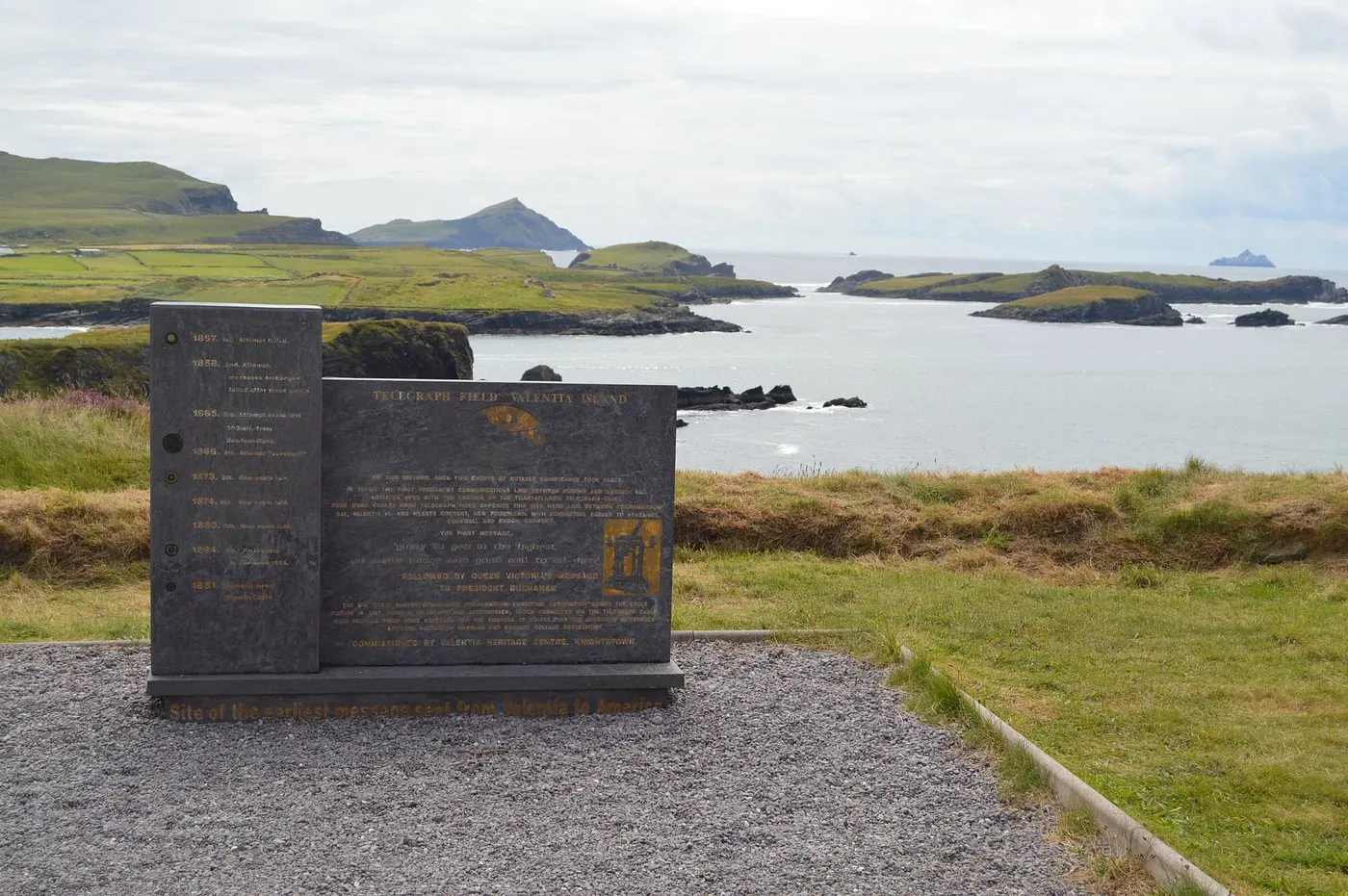
The tension was palpable. After years of preparation and eye-wateringly expensive expeditions, they had finally pulled it off. From Newfoundland, American businessman Cyrus W. Field announced that the cable between Europe and America was in place at last. It would take almost two more weeks before the first telegraph message pulsed, tap by tap, across the ocean.
On Monday 16 August 1858, Britain's Queen Victoria used the line to send nearly 100 words to her American counterpart, President James Buchanan. “The Queen desires to congratulate the President upon the successful completion of this great international work, in which the Queen has taken the deepest interest.”
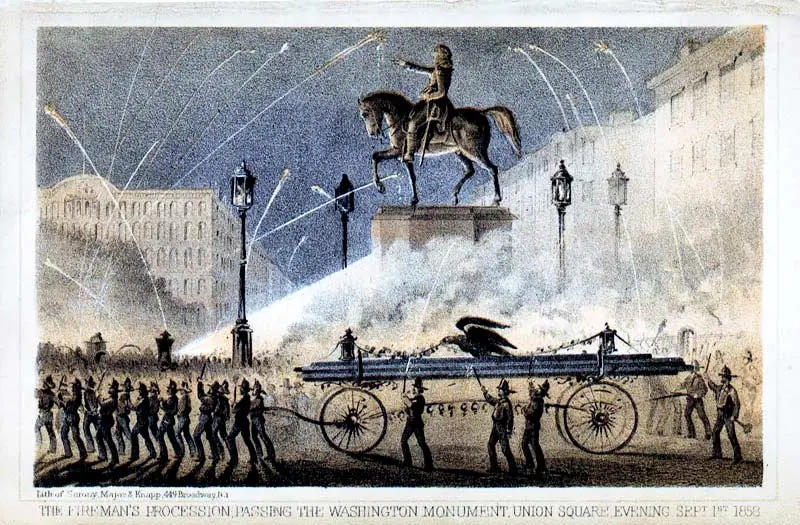
The undersea cable attracted enormous attention at the time. Not only was its length impressive, nearly 4,000 kilometres, but the very idea of direct communication between two continents captured the imagination. A new technology, complete with its own hype. That hype grew so big that newspapers started losing patience when the promised breakthrough failed to materialise.
The frustration melted away the moment word got out that a message from Europe had been received. An almost unbelievable festive mood took hold. Crowds in the streets, church bells ringing nonstop, bonfires, cannons fired just for the noise, and speeches that went on deep into the night.
Spirits were sky-high, until... the cable gave out. It lasted exactly three weeks. The connection faltered and eventually went dead. Suddenly, people began to wonder whether the whole project had been one big hoax. The Boston Courier published a lengthy article claiming that the messages supposedly sent over the cable had been fed in advance or relayed some other way. The whole thing was allegedly a scheme to pump up the share price of the Atlantic Telegraph Company and fleece unsuspecting investors.
The technology itself was suddenly seen in a different light too. Scientists, engineers and entrepreneurs came forward to openly question whether such a long undersea connection could ever work reliably. American Taliaferro Preston Shaffner, who had built telegraph lines himself, testified before a British committee that the link could never be operated successfully.
In short: this was never going to work.
As you might imagine, not everyone was convinced. Investigative committees identified key areas for improvement. In 1864, Cyrus Field managed to persuade a new group of financiers, manufacturers and engineers to give it another shot. The entire cable was loaded aboard the Great Eastern, then the largest ship in the world. Three quarters of the way through laying it, the cable snapped and its end sank to the seabed. Once again, bitter disappointment.
Field passed the hat around yet again. In 1866 the Great Eastern set sail once more and arrived without a hitch on 27 July. The connection worked. Eight years after the first telegraph message, the world finally had a working link between Europe and America.
This time, mind you, there were no fireworks or speeches. The world more or less shrugged. Of course, those involved were honoured and there were a few celebratory dinners. But the collective euphoria never returned. Harper's Magazine noted with astonishment that a historic event was being treated almost as a matter of course.
As an investor, you'll recognise several elements of this story. Expectations that build up and then fall flat. Optimism and pessimism taking turns. Technological dead ends and leaps forward. Capital flooding in, or drying up entirely. Bull and bear markets.
Perhaps the most important lesson is that, in hindsight, history always looks like a neat chain of logical, explicable steps. But those living through it often see mostly chaos, as if time itself has got tangled in knots. That's exactly how the past few weeks have felt in financial markets, with the provisional outcome that the road to the next bull market is proving twistier than expected.
Fortunately, bitcoin has long since stopped being an experiment run by a handful of cryptographers and programmers. An international ecosystem has grown up around it, involving users, entrepreneurs, financial institutions and even governments. Across the broader ecosystem, products are being built, use cases explored and problems solved. The final word on crypto's place in the financial system has yet to be written.
If you mainly watch the price, it's easy to lose sight of all that. The beauty of a long-term perspective is that you don't need to be proven right every single month to have good reasons for your position. Convictions can take a knock, especially if you're willing to keep testing them against reality.
We don't know exactly how many bends lie ahead, or how sharp they'll be. But if we zoom out a little, there's every reason to stay curious!
More Alpha
Here's what else we have on the menu today:
- ‘Bitcoin could become CO₂-negative by 2031’
- Bear market headlines are souring sentiment
- Anthropic IPO has a crypto twist
After that come the news snacks, a handy roundup of the news that really mattered last week.
1️⃣ ‘Bitcoin could become CO₂-negative by 2031’
 Contribution by
Erik
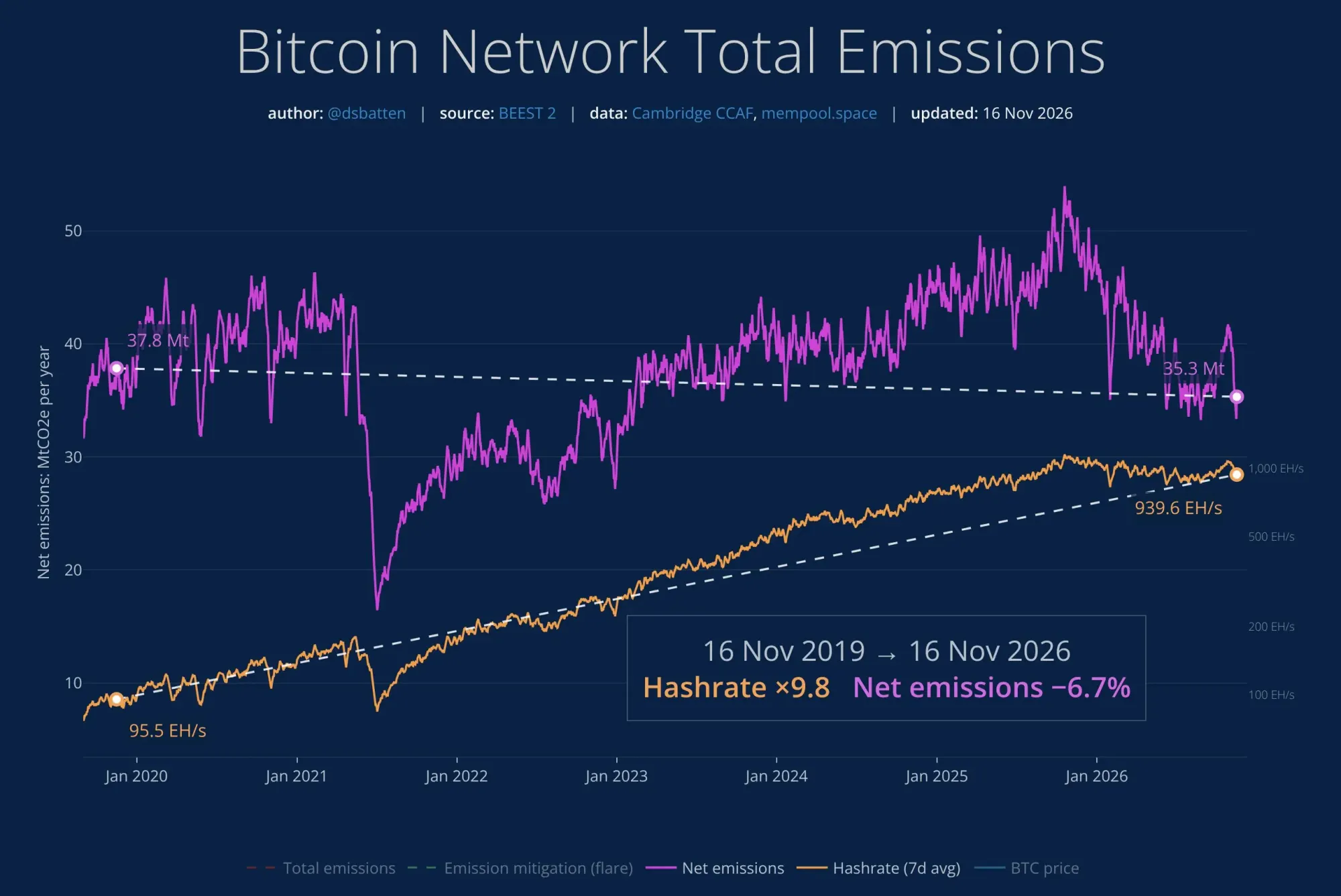
Comparing bitcoin mining with the electricity consumption of entire countries has always been a bit of a stretch, but let me use it anyway to make a point. Bitcoin miners currently use roughly as much electricity as a country like Argentina. But here's the thing: their combined CO₂ emissions are comparable to those of a country like Denmark. How do those emissions stay so low?
The days when Greenpeace was running campaigns against bitcoin's energy use are now well behind us. The moral panic in the media also seems to have died down considerably compared with 2020 and 2021. According to this article by Daniel Batten, there is less and less reason to worry about emissions. The trend is favourable, and it's conceivable that the bitcoin network will reach zero CO₂ emissions and even become carbon negative around 2031.
How is that possible? Curbing methane emissions is a major route, but it's not the only one.
Route 1: Capturing methane
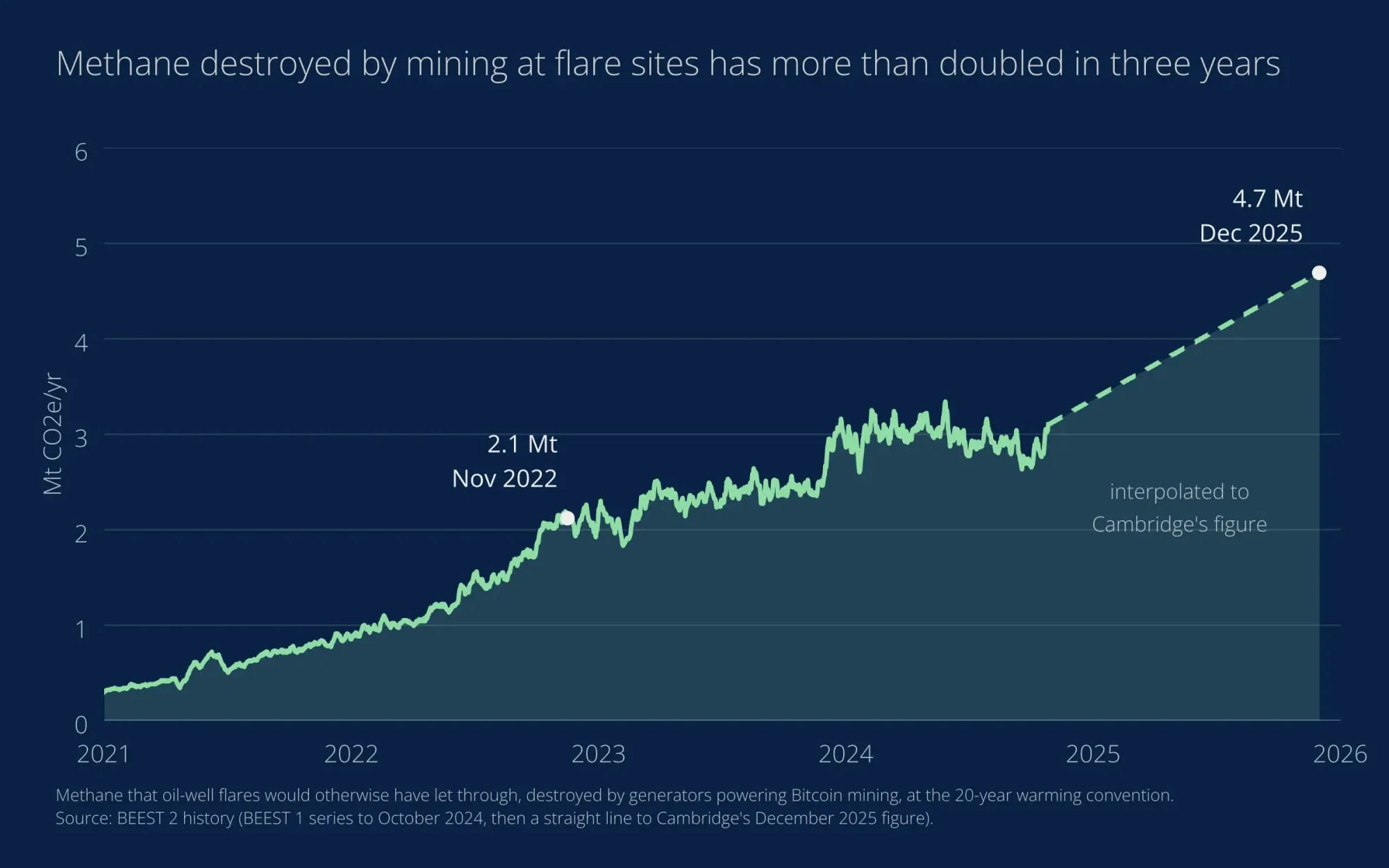
At oil wells without a pipeline, the escaping methane gas is flared off. In the process, 9% of the methane leaks into the atmosphere, and methane is a far more potent greenhouse gas than CO₂. Bitcoin miners set up a generator that burns virtually all of the methane and use the electricity on site. Batten arrives at 4.7 megatonnes of avoided emissions per year.
Route 2: Gas plants that don't have to run
In many places, the power grid relies on gas plants to handle spikes in electricity demand. A gas plant can ramp up within ten minutes, but it's a heavy emitter. On the Texas grid, bitcoin miners have shown they can do the opposite: they absorb a demand spike by switching off. During Winter Storm Fern in 2026, the local grid operator reported that mining curtailed roughly four thousand megawatts. Whatever miners switch off, a peaker plant doesn't need to burn: good for around 3.7 megatonnes of CO₂ saved every year.
Route 3: ‘Subsidising’ solar and wind farms
The third route: making wind and solar more profitable. One problem for new solar and wind farms is that there are periods when electricity prices are too low to turn a profit. But miners can buy up power during the hours when a surplus pushes prices below zero. That helps new farms become profitable sooner. Texas added 42 gigawatts of wind and solar in four years. Batten attributes a fifth of that to mining, good for 5.5 megatonnes of CO₂ emissions saved.
Route 4: Hodlers emit less
The fourth route was new to me. People who save in hard money spend less on things they don't need, Batten argues. Twenty million savers cutting their non-essential spending by a fifth? That would save 8.3 megatonnes of emissions. Batten admits that nobody has ever actually measured the size of that cutback.
But does this hold up from an accounting standpoint? Isn't saving simply deferred consumption? Surely we hodlers will one day sell our stacked BTC and spend it in the economy? True, but CO₂ that isn't emitted today contributes to climate targets right now. And we can only hope that the money we spend in, say, twenty years' time will go into a more sustainable economy. Who knows, emissions delayed may well become emissions avoided.
The totals and the forecast
Batten naturally concedes that a number of his assumptions are projections. He expects the biggest contribution from methane gas that no longer gets flared, followed in second and third place by the peaker plants and the hodlers who aren't spending.
Of the 20 megatonnes of additional CO₂ reduction needed between now and 2031, the methane fields account for almost 13. For that to happen, miners at those sites need to grow 30% a year, five years running. That pace is a trend line drawn through four data points (2022 through 2025). So not unthinkable.
Conclusion
The days when CO₂ emissions were a huge obstacle to bitcoin adoption in the court of public opinion are already behind us. Still, the issue continues to weigh on certain funds that are hesitant about adding a bitcoin ETF to their portfolios. So it would be a welcome boost if the bitcoin network does indeed manage to go carbon negative within five years or so.
For the fourth time already, we're gathering a small group for an evening of fine dining in Amsterdam. We're inviting a number of Alpha Plus members to join the team for dinner, fully on us.
What? An evening of fine dining
When? Wednesday 9 December | 7:45 pm
Who? Bert, Peter, Bart, Mike and Stijn + a number of Alpha Plus members
Location? Surprise (central Amsterdam)
Cost? None (you're our guest)
Fancy joining us some time? Register your interest using the form below and who knows, you might be there next time.
👉 https://btca.nl/uiteten
2️⃣ Bear market headlines are souring sentiment
Contribution by Peter
Last week, it was remarkably easy to find posts that capture the core of the current mood in financial markets, and in the bitcoin market in particular. The prevailing idea: this time it really is over. Stare at that for too long and you risk getting swept along by the emotion underneath it: the pain of falling prices.
The feeling that bitcoin is over is real. Not that it will fail, but that waiting 20 years for the next 10x is not worth staying engaged over. pic.twitter.com/jvpYnDwPbi
— BTC Markets (@AnselLindner) November 16, 2026
A more neutral take comes from legendary investor Stanley Druckenmiller. In an interview with Iliana Bouzali (head of sales at Morgan Stanley), he describes the awkward bind he finds himself in. “I can't remember a time when I had less clarity about where we'll be in 12 months,” Druckenmiller says.
He describes oppressive macro conditions that would normally put him on the short side of the market. Central banks hiking policy rates, geopolitical tensions running high, government debt weighing ever more heavily, and on top of that, tech-driven sell-offs on the stock market.
But he also sees the enormous innovation underway, particularly in AI, robotics and space. That momentum is hard to ignore and tells him, as an investor, to go long.
The result is a stalemate. “We're in self-preservation mode rather than growth mode,” he explains. So he's sitting on the sidelines, waiting to see which turns the market takes over the coming months.
For other seasoned investors, though, this may be just the moment to go shopping. In the third quarter, Brevan Howard tripled its IBIT position to $1.1 billion. At the end of September, Wells Fargo held 103% more IBIT shares under management than a quarter earlier. And Tudor Investment, Paul Tudor Jones's vehicle, doubled its IBIT position over the same period. If institutional players like these keep it up in the fourth quarter, we know where the shares of departing ETF investors are ending up; last week the funds closed out their fourth straight red week.
For one of those players, we already know what it's doing, because it voluntarily reports on it every week. Strategy picked up another 485 BTC in the week of 9 November and spent $228 million buying back STRC shares. The company has made the STRC target price ($100) its top priority, and has no qualms about diluting ordinary shareholders to get there. That most likely happened again last week.
The dots aren’t done. pic.twitter.com/y92ITprFKE
— Michael Saylor (@saylor) November 22, 2026
3️⃣ Anthropic IPO has a crypto twist
Contribution by Peter
On Thursday 19 November, Anthropic went public. The company floated 980 million shares, selling them at $83 apiece. That made it the largest IPO ever in terms of capital raised: at $81.3 billion, Dario Amodei trumped rival Elon Musk, who had previously raised $75 billion with SpaceXSI.
Anthropic's IPO is tied to the crypto market in more ways than one.
And no, not just because of the price action, or the big gap between the shares now in circulation and those still to come through later issuances. The first orders on Nasdaq came in well above the offer price, sending the stock nearly 40% higher in relatively short order. But a day later the price collapsed again, to just under 2% above the listing price. Some analysts are calling it a run-of-the-mill pump & dump, with the little guy, naturally, left holding the bag.
Wall Street just dumped the biggest IPO in history on regular people in 24 hours.
— Ricardo (@Ric_RTP) November 20, 2026
On Wednesday night, Anthropic priced its shares at $83, above the range it had been marketing. Counting the private placement, it was the biggest share sale on record.
Retail investors got less… pic.twitter.com/zi55UAbEB8
The most important link to the crypto market ran through the infrastructure. More than $6.5 billion worth of Anthropic perps changed hands, almost half of it flowing through Binance's machinery. Hyperliquid also cashed in on the liquidity of Anthropic investors, with billions in volume. The stock also appeared on decentralised exchanges, but volume there was hundreds of times lower.
Finally, the IPO has put the spotlight back on the investments of Sam Bankman-Fried, the jailed former boss of FTX. Years ago, using customer funds, he bought a $500 million stake in Anthropic. Its value is now estimated at $43 billion. That return can never be cashed in, though: the position was (rightly) sold during the bankruptcy proceedings for $1.34 billion.
JUST IN: Sam Bankman-Fried's former $500 million FTX investment in Anthropic $ANT would now be worth over $40 billion following its IPO.
— Watcher Guru (@WatcherGuru) November 19, 2026
FTX sold it for only $1.34 billion following bankruptcy proceedings. pic.twitter.com/RhmEnqOm0v
🍟 Snacks
To wrap up, a few quick snacks:
- 178 major brands hit by Optimizely hack, including Ledger. The service is used for marketing tools on websites. The software it relies on contained injected code designed to steal financial data, including information that grants access to crypto wallets. Affected organisations included HSBC, IKEA, Salesforce, Zoom and, yes, hardware wallet maker Ledger. For now, the threat appears to have been neutralised in time; so far ‘only’ $7,000 in crypto has been stolen.
- Work on the Clarity Act very likely frozen until 2027. That means the bill will have to be steered through every political hoop all over again, as a new Congress will be at the helm by then. Republicans involved don't expect anything to move this year. And because the Democrats will hold a majority in both chambers once sworn in, the content of any bill is likely to change too. Some Democrats are taking a sharply polarised view of the crypto sector's political prospects: “They’re fucked”.
- First perps exchange gets the green light to serve Americans. Not Hyperliquid, but Backpack has claimed that honour. To get there, the company had to gather a mountain of paperwork, including licences from the NFA and the CFTC. Now that it has succeeded, it can open its doors as a derivatives exchange in the US market. The real sticking point wasn't the type of product on offer, but the infrastructure the trading runs on: blockchains couldn't function as regulated markets. Now that this hurdle has been cleared, more players are expected to follow.
- Bill passed banning prediction markets from facilitating bets on human suffering. The Death Bets Act passed the Senate without objection and now heads to the House of Representatives. The law aims to prevent people from profiting from war, terrorism, assassinations or someone's death. It should also reduce the risk of insider knowledge being abused on prediction markets, for instance regarding military operations. On top of that, the CFTC will be empowered to extend the ban to similar undesirable bets.
- World Bank tests stablecoins to ‘modernise payments’. The group is teaming up with banking giant Citi and USDC issuer Circle. The idea is that payments, typically earmarked for development aid, reach recipients faster and more cheaply. It could also improve the transparency of money flowing to and from the World Bank. The project builds on the bank's own blockchain network, FundsChain, and will initially focus only on borrowing countries that support and permit the use of digital assets.
Thank you for reading!
To stay informed about the latest market developments and insights, follow our team members on X:
- Bart Mol (@Bart_Mol)
- Peter Slagter (@pesla)
- Bert Slagter (@bslagter)
- Mike Lelieveld (@mlelieveld)
We appreciate your continued support and look forward to bringing you more comprehensive analysis in our next edition.
Until then!