
Winter as a Selection Process
Why do correcting and quiet markets feel so uncomfortable? Discover why winter phases aren't punishment—they're a test of preparation and conviction.

When I looked out the window last week, I saw gray skies, fog, and raindrops. This time, a beautiful horizon stares back at me. The sky is clear, colored from pink to blue, and the cold hangs visibly in the air. A lovely start to the Christmas break, which began Saturday for many people. Calendars are emptying out and the rush is slowly fading from the traffic. The world is easing off the gas, both literally and figuratively.
We tend to see that stillness as a pause. As a moment when not much is happening. But historically, winter was rarely a period of rest. Quite the opposite. Winter was the moment when systems were tested. Not through major shocks or sudden drama, but through something far more fundamental: scarcity. Cold. Standstill. Through the simple question of whether you had thought things through properly when times were still comfortable.
For centuries, winter served as a selection process. Villages, families, and traders who had planned ahead came through it strong. They had wood, grain, fat, supplies. But those who didn't got stuck. Not out of stupidity, but because thinking ahead wasn't a natural part of daily life. Winter made that visible.
That lesson once took on a very concrete face for Bert and me, far from home. Years ago, we regularly traveled to Kathmandu, Nepal. One of our offices was located there. During the winter months, the city invariably struggled with fuel shortages. Gas, petrol, electricity: everything became scarce as soon as the cold set in.

What struck us wasn't so much the shortage itself, but the pattern behind it. Everyone knew winter was coming. Everyone also knew fuel would become scarce. And yet very few people built up a personal supply during summer. The unrest only arose when it got cold and the shortages became tangible. That's when thinking ahead suddenly became urgent. But that moment was almost always too late.
It simply wasn't in their DNA to anticipate something that wasn't yet causing immediate pain. As long as it was warm, preparing felt like overkill. Unnecessary. Something for later.
You see that mechanism everywhere. Including in financial markets. And with bitcoin too.
Corrections, sideways markets, and quiet periods feel like punishment to many people. As if the market is taking something away from them. As if something is "wrong." But the market isn't being vindictive here; it's simply experiencing its own winter. Phases where little moves, where tension is absent, and where it becomes visible who trades on emotion and who trades on conviction.
Now I get why they call it crypto winter. 🥶 $BTC pic.twitter.com/ushmG4wcqc
— TrendSpider (@TrendSpider) December 17, 2025
A winter market doesn't test your optimism, but your preparation. It doesn't test whether you're enthusiastic enough, but whether you truly understand and have thought through the choices you made earlier. Winters in financial markets don't create new stories, but expose the core of existing narratives.
And that's precisely why this is a good moment to reflect on who reads this newsletter. Alpha readers are, by definition, engaged in thinking ahead. Not because they have to, but because they understand that financial peace doesn't emerge at the moment everyone starts moving, but precisely before that. A subscription to this newsletter is already a form of preparation. No panic reaction, no hype, but interest in how the system actually works.
For Plus members, that might be even more true. That's not a choice born from cold or scarcity, but from the understanding that this is how you learn to think better about money and financial markets. You build up supplies, even during periods when it doesn't yet feel necessary. You build knowledge, even when there seems to be no urgency for it. That's no guarantee of success, but it does increase the odds that you'll stay calm when others start to move.
Preparation always feels a bit unnecessary, until the moment it isn't. That was true in Nepal for fuel. That was true centuries ago for grain and wood. And it's true today for understanding money, scarcity, and systems. Bitcoin fits perfectly in that list.
If you're reading this, you don't need to force anything. You're watching. You're thinking. You're letting things fall into place. And perhaps that, just before Christmas, is exactly the right attitude!
More Alpha
Are you a Plus member? Then we continue with the following topics:
- Crypto crime in 2025: North Korea scales up
- The UK introduces its 'own MiCA'
- The quantum threat looming over bitcoin
1️⃣ Crypto crime in 2025: North Korea scales up
 Contribution by
 Erik
A Chainalysis report shows that an estimated $3.4 billion in crypto was stolen in 2025, of which approximately $2 billion is attributed to North Korean hacker groups like Lazarus. Notably, the focus of hacks is shifting: DeFi hacks are less prominent in the figures. In 2025, there were actually more attacks on centralized parties and users; hacked exchanges and social engineering targeting individual wallets.
During the DeFi bubble of 2021, smart contract platforms took the biggest hits. In 2025, there were relatively few of those kinds of hacks.

The chart above shows that until 2021, total value locked in DeFi (TVL) and hack losses rose together. In 2022 and 2023, they fell together. But since 2024, a decoupling has been underway: TVL has recovered strongly, while hack losses remain low. This suggests that DeFi protocols are on average better secured than in the early years AND that attackers are shifting their focus.
According to Chainalysis, crypto crime is becoming more professional. Fewer 'cowboy hacks' and more carefully orchestrated campaigns against exchanges and individual wallets. Additionally, North Korea operates on a different scale than other actors: the average haul is significantly larger than that of other thieves. This is mainly due to the Bybit hack of February 2025, worth $1.5 billion. North Korea's high average haul is an example of how the distribution of hack proceeds also lives in 'extremistan': this single North Korean hack accounted for nearly half of all stolen crypto in 2025.
North Korea is doing fewer hacks than in previous years and is now going after the big fish. Chainalysis:
The Democratic People's Republic of Korea (DPRK) continues to pose the most significant nation-state threat to cryptocurrency security, achieving a record-breaking year for stolen funds despite an assessed dramatic reduction in attack frequency.

Individual wallets: many more victims, smaller amounts per person
Chainalysis estimates that in 2025 there were about 158,000 incidents where personal wallets were drained, representing at least 80,000 unique victims. That's nearly three times as many as in 2022. Yet the amount per wallet is actually less than in 2024: the total haul from personal wallets dropped from approximately $1.5 billion in 2024 to $713 million in 2025.
2️⃣ The UK introduces its 'own MiCA'
Contribution by Erik
The British government took an important step this week toward its own crypto regime. The bill, with the somewhat vague name "Financial Services and Markets Act 2000 (Cryptoassets) Regulations 2025," is now before the British parliament and is set to take effect from October 25, 2027. With this, the UK is arranging for crypto to no longer exist in a gray area, but to simply fall under existing financial supervision, just like other investment and payment products.
If you're wondering why the not-so-futuristic number '2000' appears in the law's name: that's because FSMA 2000 dates from the year 2000. Everything happening with crypto now consists of amendments and extensions to that existing law.
That's also an underlying difference with the European MiCA framework, which has been in effect since 2024. Where MiCA is a separate crypto law within European financial law, crypto in the UK will instead be integrated into an existing framework.
In terms of content, MiCA and the new British regime want to achieve roughly the same thing: protecting consumers, tightly framing stablecoins, and bringing crypto service providers under full financial supervision.
New crypto rules to unlock growth and protect customers https://t.co/UoOKbaYHle
— Tim Focas (@TimFocas66) December 15, 2025
Crypto platforms under existing law's umbrella
The upcoming British rules bring trading platforms, brokers, custodians, and other service providers under the umbrella of FSMA. There will be stricter requirements for governance, capital, information provision, and market abuse.
Parallel to this, regulator FCA has launched a new consultation round on the concrete implementation: how should trading platforms structure their listing policies, what rules will apply to custody, how will market manipulation be addressed, and—interesting for the stablecoin sector—what requirements will apply to issuers of tokens explicitly used as payment instruments? This opens the door for regulated British stablecoins, but also for strict enforcement if parties step out of line.
The signal? The United Kingdom is indicating its long-term commitment to a regulated, institutional crypto market.
3️⃣ The quantum threat looming over bitcoin
 Contribution by
 Peter
The discussion about quantum and bitcoin this week wasn't about qubits, algorithms, or mathematics. Not really. It was about something more fundamental: how a system without an owner responds to a threat that isn't yet tangible, but is no longer hypothetical either.
Eric Wall summed it up sharply. The question isn't whether quantum computing can technically threaten bitcoin. We simply don't know that yet. The question is how the community responds to uncertainty. Bitcoin isn't gold sitting quietly in the ground. It's digital, living, and consensus-driven. What bitcoin is only becomes apparent when it comes under pressure, according to Wall.
the bitcoin quantum question is less so a question of technical feasibility, for in that regard, the plain answer is it is unknown, as are timelines and costs
— Eric Wall (@ercwl) December 21, 2025
the actual bitcoin quantum question is just one of _community response_.
bitcoin is not gold, it is digital and…
And that's exactly where something interesting became visible this week.
On one side stands Nic Carter. The panicker. His message is easy to summarize: quantum computing is no longer science fiction, but an engineering problem. A problem that's difficult to solve, granted, but not impossible. And if history teaches us anything, it's that technological leaps often don't proceed linearly. When things go wrong, they go wrong suddenly. Bitcoin then doesn't have years to think things through calmly, but must act. And acting in panic is more dangerous than the threat itself.
 Nic Carter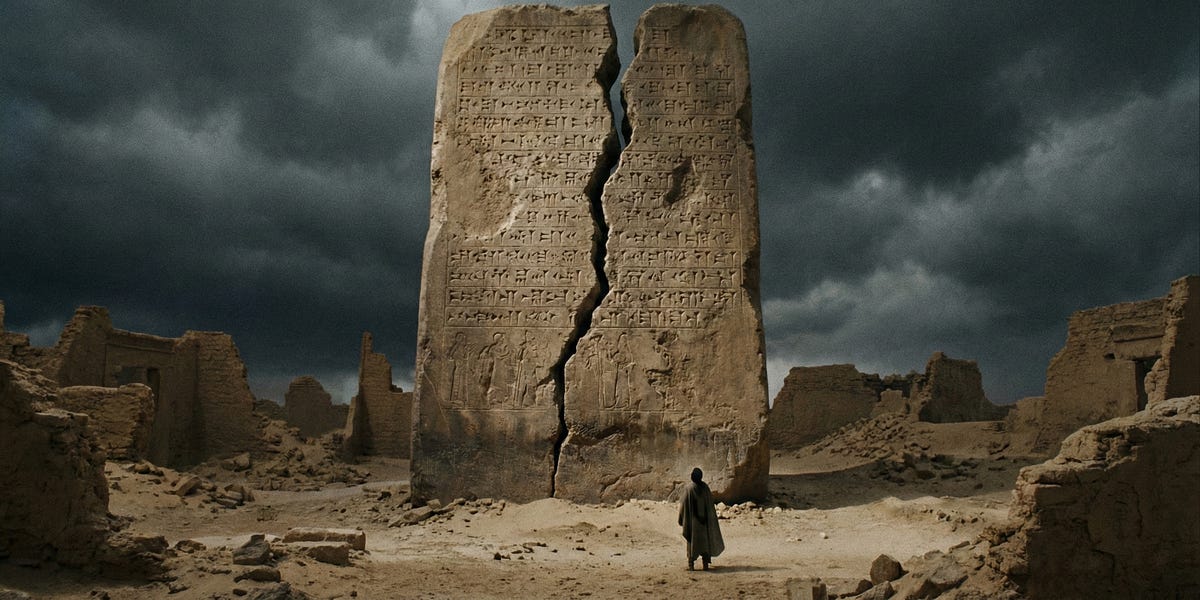
Carter points to uncomfortable facts. Millions of bitcoin are locked in old addresses that would be vulnerable in a quantum breakthrough. Those coins can't just be migrated "real quick." And a protocol change that fixes this would be the most drastic update in bitcoin's history. That takes time. Years. His conclusion: whoever does nothing now is betting that the future will be favorable. And that's poor risk management.
On the other side stands Adam Back. The gatekeeper. His objection isn't that the quantum threat is nonsense, but that the panic itself poses a risk. Bitcoin is built on caution. A wrong cryptographic choice cannot be undone. Switching to post-quantum cryptography too early could mean trading security today for a vulnerability that only becomes visible in ten years. These aren't theoretical risks, says Back, attempting to push the panickers back into their box.
what is wrong is the panic based on unrealistic time-frames (panic creates risk and loses people money). so that is wrong, and amplified and so FUD. https://t.co/XeCG86ogTp
— Adam Back (@adam3us) December 21, 2025
Between those two extremes, what emerged wasn't a stalemate, but something resembling a mature debate. It reveals itself when you ignore the breathless followers of the panickers and gatekeepers for a moment.
Bitcoin developer Jameson Lopp substantively sides with Carter, but with a sober addition: "I hope quantum computing development stalls, because the migration is going to be ugly." At the same time, he acknowledges that doing nothing isn't an option either. Seedor CEO Christian Wind then put his finger on the sore spot. The problem isn't quantum itself, but asymmetry. Bad cryptography is irreversible. That's why the right response is boring, slow, and frustrating for anyone who wants a dramatic, all-solving announcement.
People kept asking "what's the solution?" as if the only two options are ignore the problem or panic-commit bad cryptography into consensus forever.
— Coinjoined Chris ⚡ (@coinjoined) December 21, 2025
That framing is wrong.
Bitcoin's problem is not that quantum risk exists. It's that cryptographic mistakes are asymmetric: you…
No, says Wind. We don't want a fork born from panic. No hasty choice for "the one right" post-quantum signatures. But we do want to reduce risk exposure where possible now. Limit address reuse. Reduce the number of weakly encrypted addresses. And in parallel: build an emergency track that can be activated if the outside world changes.
Back to the polemic. Those who only look at the tone see an argument. Those who look closer see something different: panic, restraint, research, and strategy. All at once. As Wall puts it: this is the quantum response.
And that doesn't make bitcoin weaker. Quite the opposite!
🍟 Snacks
To wrap up, some quick snacks:
- Hong Kong steers insurance money toward crypto and infrastructure. The regulator wants insurers under new capital rules to invest in crypto and large-scale infrastructure projects. According to Bloomberg, crypto will receive heavy treatment, with a 100% risk weighting. Stablecoins will be assessed based on the underlying currency. The proposed regime may still change; a public consultation round starts in the first quarter of 2026.
- Solana and XRP ETFs beat bitcoin and ether funds. In the week of December 15-19, $644 million flowed out of Ethereum ETFs. None of the nine funds saw capital inflows. Bitcoin also saw net outflows: $497 million. Notably, investors chose smaller alternatives. XRP ETFs attracted $82 million and Solana funds $66 million. Investors may be selectively seeking new growth and momentum within crypto.
- Russian central bank acknowledges bitcoin mining's role in strong ruble. According to ECB President Elvira Nabiullina, crypto mining is an additional factor supporting the ruble. The effect is difficult to measure precisely, as a large part of the sector still operates in the shadows. Still, according to Moscow, mining influences the currency market, partly because it functions as a new export stream. Russia legalized mining last year and now provides, by its own account, 16% of global computing power.
- Grayscale sees tokenization as the next big wave. According to the asset manager, tokenized stocks and bonds are still very small, only about 0.01% of global markets. But heading toward 2030, thousandfold growth is on the horizon. The prerequisites: mature blockchain infrastructure and clearer rules. Grayscale expects Ethereum, BNB, Solana, and Avalanche in particular to benefit, with Chainlink as a crucial link for reliable data and settlement.
- Klarna deploys stablecoins for its funding. The Swedish BNPL giant will accept stablecoins from institutional investors through a partnership with Coinbase. This allows Klarna to attract capital outside traditional banks and bond markets. It fits a broader course change: after years of distance from crypto, Klarna recently launched its own stablecoin and is experimenting with wallets and blockchains.
- CryptoPunks now officially hang in MoMA. The Museum of Modern Art in New York has added eight CryptoPunks to its permanent collection. The punks were donated by a group of art collectors, with support from Larva Labs itself. This marks one of the first NFT projects definitively making the transition from internet culture to the institutional art circuit. It's notable that NFTs, in the background of the crypto world for years, are now making the leap to museum-worthy heritage.
- Fundstrat warns internally of significant correction. From an internal update from Fundstrat, it appears the research firm expects a substantial correction in the first half of 2026. Price targets are much lower than Bitmine CEO and Fundstrat founder Tom Lee publicly outlines: bitcoin $60,000 to $65,000, ether $1,800 to $2,000. According to Fundstrat, this isn't a contradiction, but a difference in audience and time horizon. Yet the picture is awkward: external optimism, internal caution.
- Crypto hedge funds experience toughest year since 2022. For many venture capitalists, 2025 is turning into a disappointment, writes Bloomberg. Funds betting on directional strategies are slightly in the red, while strategies focused on altcoins lost an average of about 23%. Only market-neutral funds managed to make money. Rapid price shocks, low liquidity, and the rise of ETFs made classic trading strategies less profitable. The hard crash in October also exposed that market infrastructure is still vulnerable.
- Ethereum plans next major upgrade for late 2026. After the Glamsterdam upgrade, Ethereum will get a follow-up later in 2026 called Hegota. This upgrade should make the network more efficient and scalable. Developers are working on ways to reduce the amount of data nodes need to store, making the network faster and cheaper. For users, this mainly means a more stable network and room for further growth of applications.
- Fed scraps restrictive crypto guidelines for banks. The American central bank withdraws 2023 guidelines that made it virtually impossible for banks focused on the crypto world to become members of the Federal Reserve system. Those rules also formed the basis for Custodia Bank's rejection. Withdrawing them points to a milder stance: crypto is less excluded by default and banks are once again given room to operate within the system.
Thank you for reading!
To stay informed about the latest market developments and insights, follow our team members on X:
- Bart Mol (@Bart_Mol)
- Peter Slagter (@pesla)
- Bert Slagter (@bslagter)
- Mike Lelieveld (@mlelieveld)
We appreciate your continued support and look forward to bringing you more comprehensive analysis in our next edition.
Until then!